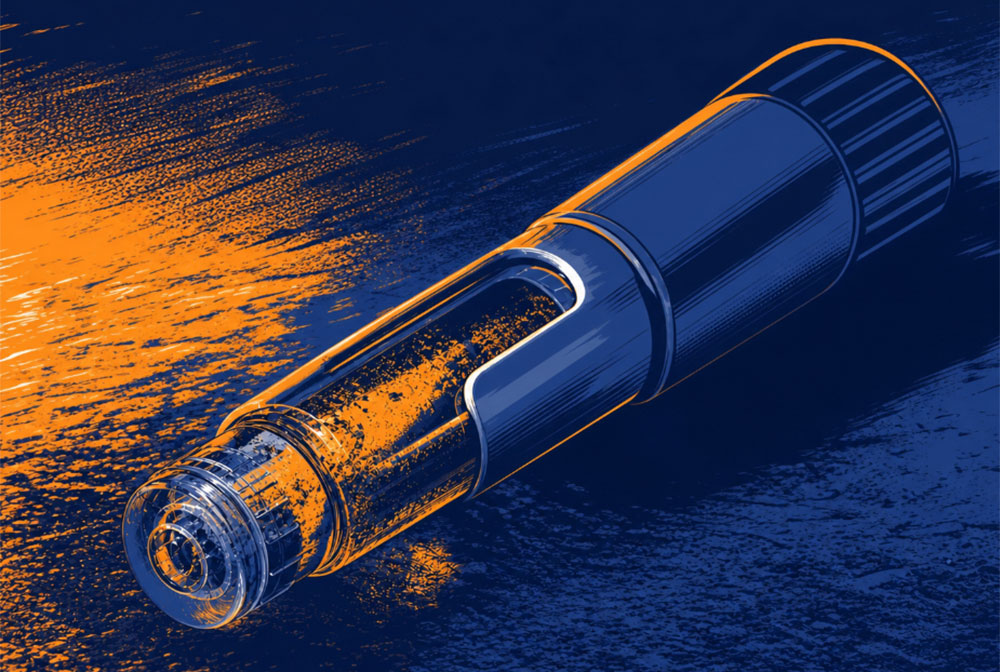
Fake Weight Loss Injections Canada: What to Know
- Jump to a Section:
Shortages in the weight loss injection market have pushed a lot of people toward faster or cheaper options, and counterfeit sellers have noticed. The packaging looks right, the price feels like a deal, and there's no prescription required, which should be the first warning sign. Here's what separates a legitimate source from one that could put overall health at risk.
TLDR:
- Health Canada has warned Canadians about fake weight loss injections circulating in retail stores, spas, and online.
- Counterfeit products carry serious health risks, including contamination with bacteria, heavy metals, or insulin substitution.
- Watch for missing Drug Identification Numbers, no prescription required, or payment by cryptocurrency or gift card.
- Verify any weight loss injection by checking the eight-digit DIN against Health Canada's Drug Product Database.
- Phoenix is a Canadian men's digital health service that connects Canadians with licensed healthcare providers for weight loss treatment. Getting started means completing a secure online health questionnaire that covers medical history, current health conditions, and weight management goals. A licensed Canadian healthcare provider reviews that information and determines whether treatment is medically appropriate before anything is prescribed. If a provider approves treatment, the prescription is filled and shipped through a licensed Canadian pharmacy partner in discreet, unbranded packaging. That combination, a real health assessment, a licensed provider's review, and a regulated pharmacy fill, is what separates an authorized weight loss prescription from a product sold without any of these safeguards. Patients can also reach their care team with follow-up questions as treatment continues, so ongoing changes don't have to be handled without support.
The Rise of Counterfeit Weight Loss Injections in Canada
Demand for weight loss prescriptions in Canada has grown quickly, and legitimate supply has not always kept up. That gap has left room for unauthorized and counterfeit versions to enter the market through channels that look convincing but skip the safety checks a licensed pharmacy would run.
Health Canada has issued a public warning telling people to be cautious before buying weight loss injections, noting that fake or unauthorized products have circulated in Canada, turning up in retail stores, spas, and online sellers posing as pharmacies without a real license.
For anyone searching for weight loss treatment online in Canada, a shortage-driven market pushes people toward whatever option seems fastest or cheapest, which is exactly what counterfeit sellers count on.
Counterfeit, Unauthorized, and Compounded: What Each Term Means
These three terms are often used interchangeably, but they describe very different problems with very different risk profiles. A counterfeit product is a deliberate forgery: packaging, labelling, and branding copied from an authorized product, but the contents manufactured outside any licensed facility with no quality controls. The active ingredient may be absent entirely, substituted with something else, or present at the wrong concentration. An unauthorized product is one that has not been reviewed or approved by Health Canada, meaning there is no confirmed evidence of its safety, quality, or efficacy for use in Canada. This category includes products legally sold in other countries but not cleared for the Canadian market, as well as products imported through grey-market channels. A compounded weight loss injection sits in a more complex position: compounding is a legitimate pharmacy practice in Canada, where a licensed pharmacist prepares a customized formulation for a specific patient under a valid prescription, but compounded products are not subject to the same pre-market review as manufacturer-produced medications, which means quality can vary considerably between compounding pharmacies. The key distinction is that legitimate compounding requires a licensed pharmacist, a valid prescription from a licensed healthcare provider, and oversight by a provincial pharmacy regulatory authority. A vial labelled as compounded but sold without a prescription is not a legal compounded product.
Health Canada authorizes a specific list of GLP-1 products for prescription use in Canada. If a product isn't on this list, it hasn't been reviewed for safety or efficacy here:
- Semaglutide-based: Ozempic, Wegovy, Rybelsus
- Tirzepatide-based: Mounjaro, Zepbound
Health Risks of Fake Weight Loss Injections
Counterfeit weight loss injections carry risks beyond a wasted purchase. Since they are produced outside any licensed facility, there is no way to know what is actually inside the pen. The World Health Organization has raised concerns about falsified diabetes and weight loss medicines, and some reports describe cases where the contents may have been swapped for insulin, a substitution that can cause dangerously low blood sugar.
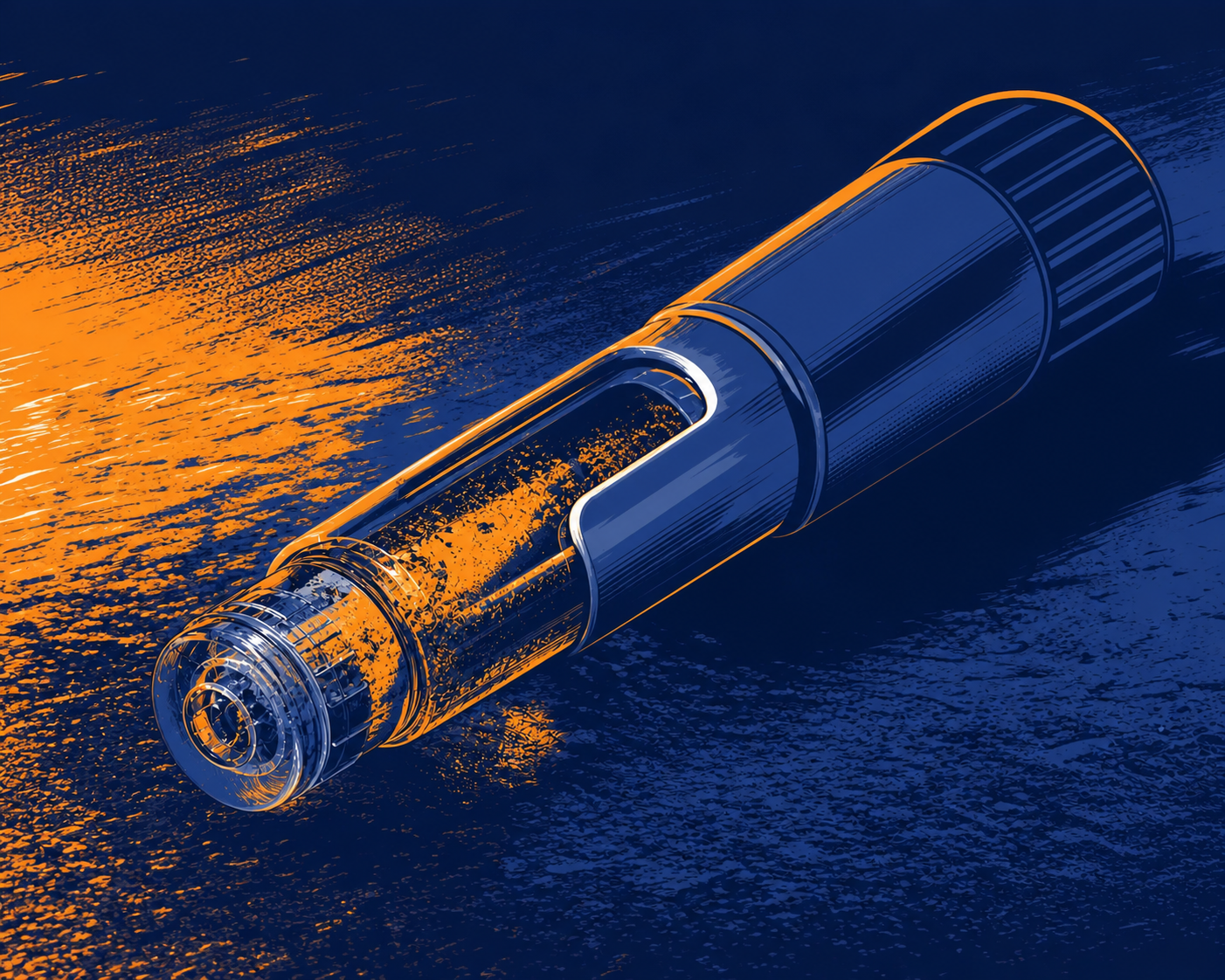
Unregulated manufacturing also skips sterility testing, leaving room for contamination with bacteria, fungi, heavy metals, or glass particles. Any of these can trigger infection at the injection site or a broader reaction throughout the body.
Many of these dangers only surface after use, once someone develops an infection or an unexplained blood sugar drop. The WHO medical product alert on falsified Ozempic reportedly spans multiple regions, suggesting the problem may not be confined to one country. None of it appears on the packaging, since a counterfeit pen can look identical to an authorized one.
Where Fake GLP-1 Products Are Being Sold
Counterfeit weight loss injections tend to show up in a handful of predictable places, and knowing them makes it easier to spot trouble before you buy.
- Social media ads and direct messages, often from accounts with few followers or newly created profiles
- Websites that display forged Health Canada logos or fake pharmacy license numbers to look official
- Retail shops and spas selling injections off the shelf, outside any prescription process
- Online marketplaces where sellers list weight loss injections alongside unrelated products, with little verification of who is buying
A newer tactic involves labeling vials as "research chemicals" or "not for human use," a workaround that lets sellers skip safety standards required for medical products. Patients should understand generic semaglutide in Canada before purchasing anywhere, since sellers still use this term to market unauthorized products.
Some sellers also use AI generated videos or images of celebrities and healthcare providers appearing to endorse a product, borrowing credibility they have not earned through any licensed process. Recognizing this tactic can help distinguish legitimate information from manufactured endorsements.
Red Flags to Watch For Before You Buy
A few consistent warning signs separate an unauthorized seller, sometimes called a source of "fauxzempic" in Canadian media coverage, from a legitimate one. Spot even one, and treat it as a reason to walk away.
- No Drug Identification Number, or one that does not match Health Canada records. Every authorized medication sold in Canada carries a DIN, and a seller unable to provide one is a problem.
- No prescription required. A legitimate weight loss injection is only available after a licensed healthcare provider reviews your health information. Learning how to get Ozempic online in Canada through proper channels clarifies what that process should look like.
- Generic semaglutide vs Ozempic vs Wegovy pricing in Canada has a legitimate range: prices far below what pharmacies typically charge are often a sign the product bypassed a licensed supply chain.
- Payment accepted only by cryptocurrency, gift cards, or e-transfer, methods that are hard to trace and even harder to reverse. Reviewing Ozempic and generic semaglutide costs in Canada through a licensed provider helps set realistic price expectations.
- No real business location in Canada, or vague, evasive answers about where the seller actually operates.
- Fake endorsements or logos claiming Health Canada approval or medical association backing, which Health Canada never grants through social media or third party sellers.
If you believe you've already used a counterfeit weight loss injection, a few steps can help protect overall health and support enforcement:
- Stop using the product and keep any remaining product and packaging.
- Contact a licensed healthcare provider if you notice unusual symptoms.
- Report the product to Health Canada through its online reporting form.
- Keep purchase records, including receipts and any seller communication.
How to Verify a Legitimate Weight Loss Prescription in Canada
Verifying a prescription before you commit to a purchase takes a few minutes, and it is the single best way to protect yourself from a counterfeit product.

Check the Drug Identification Number. Every authorized medication in Canada carries an eight digit DIN. Search this number against Health Canada's Drug Product Database to confirm it matches the product you received. If the number is missing or belongs to a different product, that is a clear signal something is wrong.
Confirm the pharmacy is licensed. Legitimate Canadian pharmacies, including online ones, register with a provincial pharmacy regulatory authority. The National Association of Pharmacy Regulatory Authorities outlines how to verify a Canadian pharmacy is legitimate, including checking provincial licensing and a listed pharmacist of record.
Insist on an actual prescription. A weight loss injection is a prescription product in Canada. A licensed healthcare provider must review your health information before anything is dispensed. Be cautious with sites offering to dispense without a prescription, as this signals a source operating outside the licensed system.
What Health Canada and Canadian Regulators Are Doing
Health Canada goes beyond issuing warnings. The agency actively monitors the marketplace for unauthorized weight loss injections through inspections, product testing, and complaints from consumers and healthcare providers who spot something suspicious.
When Health Canada identifies a problem product, it can seize inventory, issue compliance and warning letters to sellers, and order a product pulled from the market. These actions get logged publicly, so a pattern of enforcement against a specific seller is often visible to anyone checking.
Health Canada also works with the Canada Border Services Agency to intercept unauthorized shipments before they reach Canadian buyers. Packages lacking proper documentation can be flagged at the border, which is part of why many counterfeit sellers rely on domestic drop shippers instead.
None of this sits in a legal gray area. Selling unauthorized health products in Canada violates the Food and Drugs Act, the federal law governing what can be manufactured, sold, and advertised as a health product in this country. By contrast, online weight loss programs in Canada that operate within this framework follow a very different process.
How Phoenix Connects Canadians to Authorized Weight Loss Treatment
Phoenix is a Canadian men's digital health service that connects Canadians with licensed healthcare providers for weight loss treatment.
Final Thoughts on the Risks of Unauthorized Weight Loss Injections in Canada
The gap between what a legitimate product looks like and what a counterfeit one looks like is almost nothing, which is what makes this genuinely dangerous. Verifying a DIN, checking provincial pharmacy registration, and getting a real prescription are small steps that carry a lot of weight. Health Canada's tools are there to help you confirm what you're getting before you use it.
FAQ
How do I verify that a weight loss injection I bought in Canada is not counterfeit?
Check the Drug Identification Number (DIN) on the packaging against Health Canada's Drug Product Database. Every authorized prescription weight loss injection sold in Canada carries an eight-digit DIN, and a mismatch or missing number is a clear warning sign. You can also confirm the dispensing pharmacy holds a valid provincial licence through the National Association of Pharmacy Regulatory Authorities (NAPRA). If you received the product without a prescription from a licensed healthcare provider, it did not come through a licensed supply chain.
What are the real health risks of counterfeit GLP-1 drugs in Canada?
Counterfeit GLP-1 drugs produced outside licensed facilities skip sterility testing, which means the contents may include bacteria, fungi, heavy metals, or glass particles. None of that appears on the label. The World Health Organization has raised concerns about falsified weight loss and diabetes products, with some reports describing cases where insulin was found instead of the labelled active ingredient, a substitution that may cause dangerously low blood sugar. These risks only surface after use, which is why sourcing through a licensed Canadian healthcare provider and a licensed pharmacy is the recommended path.
Are counterfeit GLP-1 drugs in Canada actually dangerous, or just less effective?
Counterfeit GLP-1 drugs can be genuinely dangerous, and not merely ineffective: contamination, wrong active ingredients, and unsterile manufacturing have all been reported in unauthorized weight loss injections circulating in Canada and internationally. Health Canada actively seizes these products and works with the Canada Border Services Agency to intercept unauthorized shipments, but counterfeit pens can look identical to authorized ones, making visual inspection unreliable. The only way to confirm you have a safe product is to obtain it through a licensed healthcare provider and a provincially licensed pharmacy.
What red flags tell me I'm looking at an unauthorized seller of weight loss injections online?
The clearest red flags are no prescription required, no verifiable DIN, prices well below what licensed Canadian pharmacies charge, and payment methods limited to cryptocurrency, gift cards, or e-transfer. Sellers using AI-generated celebrity endorsements or forged Health Canada logos are also operating outside the licensed system. Health Canada does not grant approval through social media or third-party sellers. Spotting even one of these signs is reason enough to walk away.
Should I buy GLP-1 weight loss injections from a spa or retail shop vs. a licensed online clinic in Canada?
A spa or retail shop selling weight loss injections off the shelf is operating outside any prescription process, which means no licensed healthcare provider has reviewed your health information and no licensed pharmacy has dispensed the product. A licensed online clinic connects you with a licensed Canadian healthcare provider who conducts a clinical assessment before any prescription is issued, and dispenses through a provincially licensed pharmacy partner. For anyone in Canada looking to access weight loss injections safely, the prescription-required route through a licensed provider aligns with Health Canada's standards.

Recommended Articles

Ozempic Online in Canada: What to Know in 2026
Order Ozempic online in Canada through a licensed healthcare provider. See pricing for brand and generic semaglutide, and how the assessment works.

What Makes GLP-1 Different for Men
GLP-1 treatment works differently in men. Key factors like muscle loss, side effects, and Canadian access options explained.

Online Weight Loss Programs in Canada: What to Know Before You Start
Considering an online weight loss program in Canada? Learn how medical weight management works, eligibility, costs, safety and what to look for.