
Preserving Muscle While Losing Weight on GLP-1
- Jump to a Section:
Weight loss on GLP-1 treatment can happen fast, and that speed is one of the things that makes muscle preservation worth thinking about early. The faster weight drops, the more lean mass tends to go along with it if you're not actively working to hold onto it. Here's what actually helps.
TLDR:
- Up to 40% of weight lost on GLP-1 treatment may come from lean mass, not fat, per Mayo Clinic Press.
- Aim for 1.2 to 1.6 grams of protein per kilogram of body weight daily to help protect muscle during treatment.
- Pair protein targets with 2 to 3 resistance training sessions per week for the most muscle preservation.
- Track strength alongside weight: a dropping lift number signals muscle loss the scale won't show you.
- Men's online health clinics connect Canadian men with licensed practitioners who can support weight loss and ongoing muscle preservation guidance.
Why Rapid Weight Loss Treatment Can Lead to Muscle Loss
GLP-1 treatments, including semaglutide-based options like Ozempic and Wegovy, and dual-action tirzepatide, work by slowing digestion and reducing appetite, so you naturally eat less without feeling deprived at every meal. That drop in calorie intake drives weight loss, but it also drives muscle loss, since the body pulls energy from a mix of fat and lean tissue during any calorie deficit. This is not unique to GLP-1 treatment; it is how the body responds to eating less.
What sets GLP-1 treatment apart is pace. Weight loss treatment happens faster and in larger amounts than with diet alone, so a bigger share of what you lose can come from muscle instead of fat if lean mass goes unprotected.
How Much Muscle Loss Is Typical on GLP-1 Treatment
Research suggests that roughly 25 percent to 40 percent of the weight lost during GLP-1 treatment may come from lean mass instead of fat, according to Mayo Clinic Press. A 2024 review published in Diabetes, Obesity and Metabolism found the range may be wider, with lean mass accounting for 15 percent to 60 percent of total weight lost depending on the specific treatment, the patient's age, and starting body composition. This range is not unusual since most calorie deficit driven weight loss pulls from both fat and muscle. What changes with GLP-1 treatment is speed, so faster loss can mean more raw muscle lost over the same stretch of time. Some research suggests that functional strength may hold up better than lean mass measurements alone imply, partly because GLP-1 treatment may reduce fat buildup within muscle tissue itself, which can improve muscle quality even as total mass declines. This quality benefit tends to be smaller in older adults, whose muscle responds less efficiently to the same signals, so evidence on this point still varies. How much you lose depends on age, starting muscle, diet quality, and activity level during treatment.
Why Muscle Loss Matters More Than the Scale Shows
Muscle tissue burns more calories at rest than fat, so losing it slows the resting metabolic rate, meaning the calories the body burns just to keep running. That makes weight harder to keep off once treatment ends.
Muscle also supports strength, balance, and everyday function: carrying groceries, climbing stairs, catching yourself if you trip. Lose enough, and daily function suffers even as the scale drops.
In men, skeletal muscle plays a role in blood sugar regulation, insulin sensitivity, and cardiovascular health. Less muscle means the body struggles more with glucose management.
A lower weight paired with reduced strength and higher fat percentage is sometimes called skinny fat: smaller, but not necessarily healthier or more capable. Tracking your BMI calculator for men alongside body composition gives a fuller picture.
The Higher Risk for Older Men
Age related muscle loss, known as sarcopenia, already affects older men before any weight loss treatment enters the picture. Up to half of adults over age 80 experience it, raising the risk of falls, fractures, and disability, according to Endocrine News. Add treatment on top, and the risks multiply.
Older men tend to lose a greater share of lean mass than younger men on the same treatment, partly due to anabolic resistance: aging muscle responds less efficiently to the protein and exercise signals that normally trigger repair and growth, according to research published in PMC. The same protein intake and workout that preserves muscle at 30 may not be as effective at 60. GLP-1 treatment can also improve muscle quality by reducing fat buildup within muscle tissue, but this benefit tends to be smaller in older men, so it does not fully offset the greater lean mass losses they face.
Sarcopenic obesity, a combination of excess fat and low muscle mass, may affect a meaningful share of obese adults seeking weight loss treatment, according to some estimates, though the exact prevalence varies by study and population. This becomes a bigger concern if treatment stops and weight returns without muscle following. For older men, muscle preservation belongs in the plan from day one, not an afterthought.
Protein: The First Line of Defence Against Muscle Loss
Appetite suppression is the point of GLP-1 treatment, but smaller meals often mean protein gets cut first, right when your needs actually go up.
For muscle preservation, aim for daily protein to lose weight, not muscle: many nutrition researchers suggest roughly 1.2 to 1.6 grams per kilogram of body weight daily, well above the general 0.8 g/kg maintenance guideline that applies to sedentary adults. A 90 kg man would need roughly 108 to 144 grams daily at that target range.
Spreading that across 3 to 4 meals with roughly 25 to 40 grams each is a commonly recommended approach, since muscle protein synthesis (how the body repairs and builds muscle) is generally thought to respond better to steady doses than one large meal.
Good sources include:
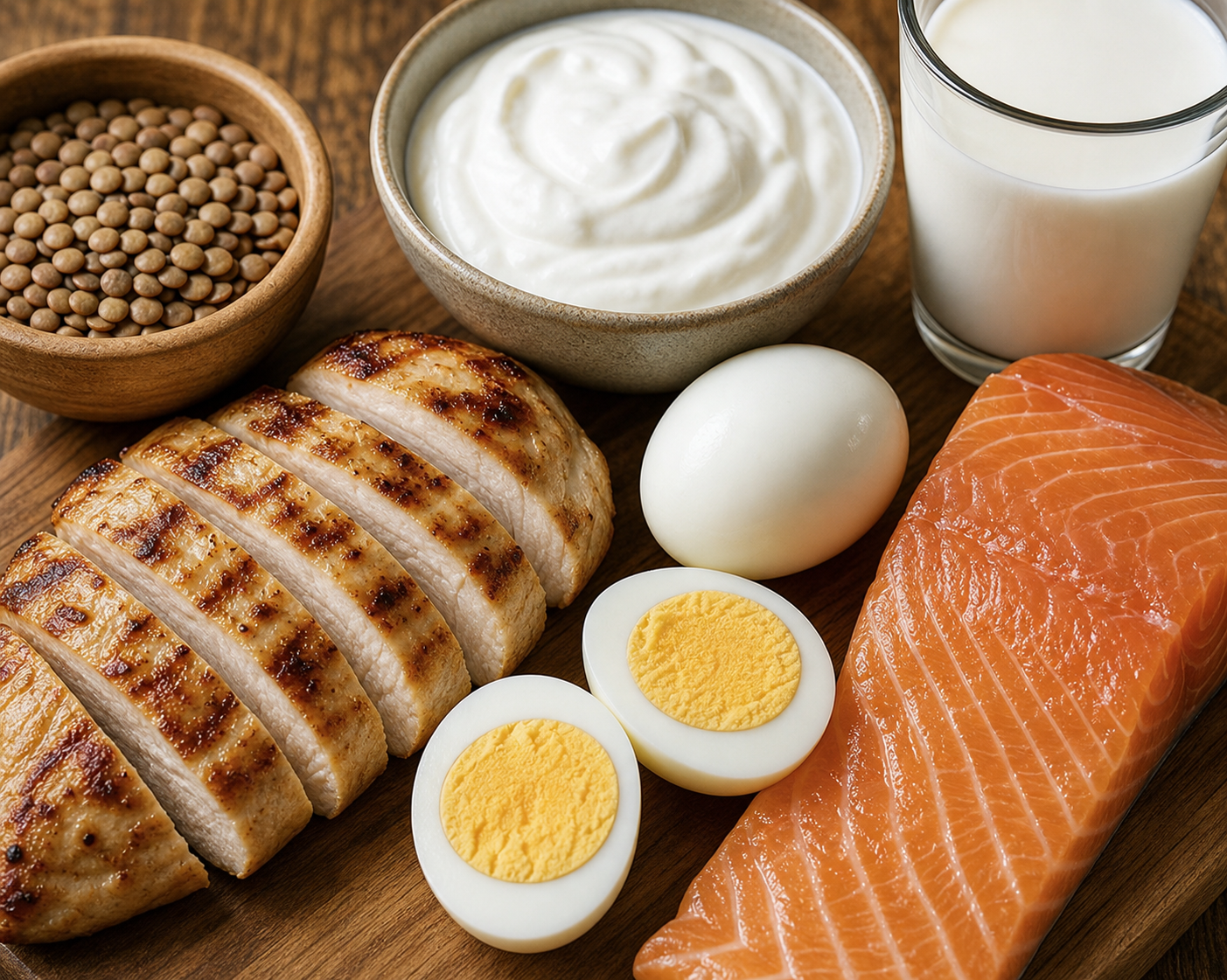
- Lean meats and fish
- Eggs and dairy
- Legumes and lentils
- Plant-based options like tofu and tempeh
When appetite is low, protein powders can help close the gap without added food volume.
Resistance Training: The Other Half of the Strategy
Protein alone slows muscle loss during treatment, but strength training during medical weight loss is what signals the body to keep the muscle it has. Combining a high protein diet with consistent exercise shows the greatest benefit for preserving bone and muscle mass, compared to diet alone, according to Massachusetts General Hospital Advances in Motion. Cardio supports heart health and the calorie deficit, but exercise and lifestyle changes for GLP-1 shows resistance training carries more weight for muscle protection.

Two to three sessions per week covering major muscle groups is a widely recommended starting point, focused on compound movements:
- Squats
- Rows
- Presses
- Deadlifts or hip hinges
Add weight or reps over time. Bodyweight exercises and bands work fine at home.
Micronutrients and Supplements Worth Knowing About
Eating less cuts more than calories. It reduces the vitamins and minerals in food, and a few of those matter directly for muscle. Vitamin D, magnesium, and B vitamins support muscle function and recovery, and smaller meals make it easy to fall short without noticing.
Vitamin D and calcium deserve attention too. Rapid weight loss can affect bone density, a concern for older men already managing age related bone changes. A blood test shows where you actually stand, without the guesswork.
Creatine is among the most researched supplements for supporting muscle during calorie restriction, though results vary from person to person. It does not replace protein or resistance training, but it is worth understanding.
Discuss any supplement plan with a licensed healthcare provider, and review the GLP-1 lifestyle dos and don'ts since GLP-1 treatment is a prescription based intervention with its own interactions to consider.
How to Assess Muscle Loss During GLP-1 Treatment
A few methods can tell you more about what is actually changing in your body during treatment. DEXA scans, MRI, and CT imaging give the most accurate read on muscle versus fat, but they are expensive and not always available outside hospital settings in Canada.
Grip strength testing is a practical alternative. A hand dynamometer measures how hard you can squeeze, and it is a method researchers use to catch early functional decline. Some family doctors and physiotherapists have one on hand.
The chair stand test works well at home: count how many times you can stand up from a seated position in 30 seconds without using your arms. It is a simple way to track lower body strength over time.
Bioelectrical impedance scales, available at many gyms and pharmacies, offer a rough estimate of body composition. None of these methods is perfect on its own, so talk to your licensed healthcare provider about which combination makes sense for tracking your progress.
Tracking Your Progress Beyond the Scale
The scale tells you how much weight you lost, not what kind. Two men dropping the same 20 pounds can end up in very different places: one keeps most of his muscle and drops mostly fat, the other loses a larger share of lean tissue. The number on the scale looks identical either way.
A few methods give a fuller picture:
- Strength benchmarks: how much you can lift on key exercises like squats or presses
- Physical measurements: waist and limb circumference, tracked over time
- Body composition tools: DEXA scans or bioelectrical impedance devices, where available
Weekly weigh-ins swing with water and food volume, so they tend to mislead more than clarify. A monthly check on both weight and strength gives a steadier read on what is actually changing.
If your strength keeps dropping while the scale keeps moving, treat that as a signal, not a coincidence. Warning signs worth mentioning to your provider include a drop in grip strength, more trouble with tasks that used to be easy, like standing up from a chair without using your arms, a slower walking pace, and fatigue that does not match your calorie intake. These are the same functional markers providers watch for when checking on muscle loss risk during treatment. It usually means protein intake or training volume needs a second look, worth raising with a licensed healthcare provider who understands your treatment plan.
How Men in Canada Can Access Weight Loss Treatment With Provider Support
In Canada, medically supervised weight loss requires an assessment by a licensed healthcare provider, who reviews your health history before determining if treatment is appropriate.
Provider contact should not end once a prescription ships. Muscle preservation is not fixed at the start; protein targets and training intensity often need adjusting as your weight changes. A provider who checks in along the way can catch a slipping strength trend or a shrinking appetite before it turns into meaningful muscle loss.
Telehealth has made ongoing access easier for men across Canada, and online weight loss programs in Canada explain what to expect, including for those in rural areas where a specialist visit once meant a long drive. Men's online health clinics connect patients with licensed practitioners who review health history and provide follow-up guidance, matching the standard of care found in traditional in-person appointments without the waiting room.
Weight Loss Support for Canadian Men
Men's online health clinics in Canada connect you with licensed healthcare providers who review your health history and determine whether prescription weight loss treatment is appropriate for your situation.
What sets provider-supported care apart from self-directed weight loss is ongoing access. A licensed healthcare provider can adjust your treatment plan as your weight changes, catch early signs of muscle loss, and recommend changes to protein targets or training intensity before the problem compounds. That kind of follow-up is especially valuable for older men, where the margin for lean mass loss is narrower.
Final Thoughts on GLP-1 Muscle Loss in Men
Weight loss treatment can work well, but muscle preservation takes active effort on your part. Protein targets, resistance training, and the right micronutrients all play a role, and those needs shift as your weight changes. Working with a licensed healthcare provider for the full course of treatment gives you a strong chance of losing fat without giving up the strength and function that matter for your long-term health. Regular check-ins to review protein intake, training response, and functional markers like grip strength or the chair stand test are what separate a well-managed plan from one where muscle loss goes unnoticed until it adds up.
FAQ
How much muscle loss should men in Canada expect on prescription weight loss treatment?
Research suggests roughly 25 to 40 percent of total weight lost during GLP-1 treatment may come from lean mass instead of fat, though this varies based on age, starting muscle mass, diet quality, and activity level. The faster pace of treatment-driven weight loss is what raises the risk compared to slower, diet-only approaches. Semaglutide-based treatments are among the most studied GLP-1 options, so researchers have a clearer picture of this pattern for them than for newer medications. For most men, this is manageable with the right protein intake and resistance training in place from the start.
Best way to preserve muscle on GLP-1 treatment while losing weight?
The two most reliable strategies are hitting a protein target of 1.2 to 1.6 grams per kilogram of body weight daily and doing resistance training two to three times per week covering major muscle groups. Protein preserves lean mass during a calorie deficit, while resistance training signals your body to hold onto the muscle it has. Relying on protein alone, without exercise, leaves a large portion of the work undone.
Does GLP-1 muscle loss risk increase with age for Canadian men?
Yes. Sarcopenia begins before treatment, and anabolic resistance means the same protein and training does less work at 60 than at 30. See the older men section above.
How do I track whether I'm losing fat or muscle during GLP-1 weight loss treatment?
The scale alone cannot tell you what kind of weight you're losing. Two men dropping the same 20 pounds can end up with very different body compositions. Track strength benchmarks on key exercises like squats or presses, measure waist and limb circumference monthly, and consider body composition tools like DEXA scans or bioelectrical impedance devices where available. If your strength keeps dropping alongside your weight, that is a signal to revisit your protein intake or training volume with a licensed healthcare provider.
Can I access GLP-1 weight loss treatment and muscle preservation support online in Canada without a clinic visit?
Yes. Men's online health clinics connect Canadian men with licensed healthcare providers who review your health history, determine if prescription weight loss treatment is appropriate, and provide ongoing follow-up as your weight and needs change. This is especially practical for men in rural areas or those without a regular care provider, since telehealth appointments meet the same standard of care as in-person visits without the waiting room.

Recommended Articles

Understanding Food Noise and Why Willpower Isn't the Fix
Explore the real causes of food noise and natural strategies to quiet it. Updated with the latest insights as of October 2026.

What Is Medically Supervised Weight Loss?
Find out how medically supervised weight loss combines provider oversight with ongoing support for lasting results.

A Realistic Weekly Weight Loss Rate for Men
Guide to healthy weight loss speed for men, covering plateaus, waist size tracking, and doctor warning signs.