Tired all the time? Your breathing at night could be why.
Obstructive sleep apnea (OSA) is one of the most common sleep conditions in Canada, and one of the most overlooked. Learn the signs, check your risk and know when to talk to a healthcare provider.
This page is for education only and does not diagnose sleep apnea.
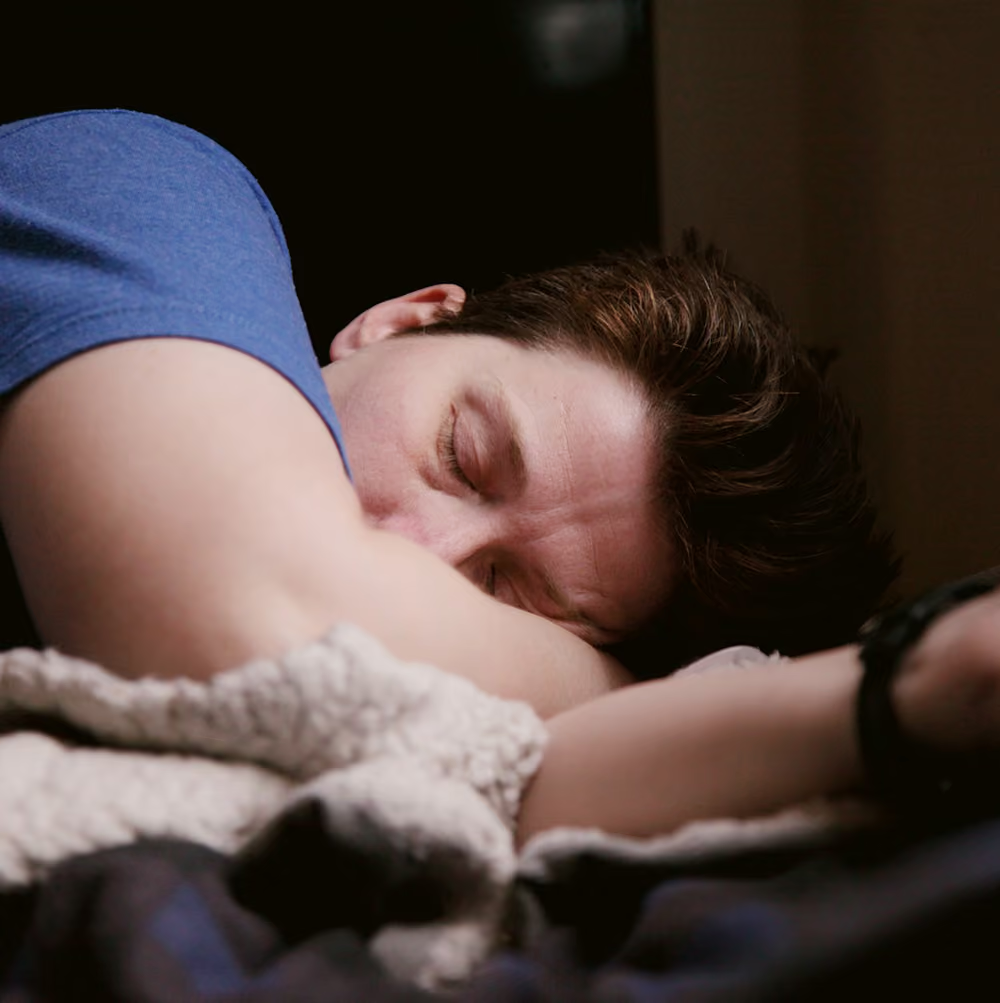
Often missed at night.
Most people with OSA don't know their sleep is being interrupted.
Common, serious and often missed.
Most people at higher risk are never screened. Many assume snoring is harmless or that feeling tired is just part of life. Knowing the signs is the first step.
28%
of Canadian adults aged 45 to 85 are estimated to be living with moderate-to-severe OSA.1
80%
of cases may go undiagnosed, according to some estimates.2
What happens during obstructive sleep apnea.
During sleep, the muscles in the throat relax. With OSA, the upper airway repeatedly narrows or closes, briefly reducing or stopping airflow. Each time, the brain partly wakes you to restart breathing, often without you noticing.



How OSA disrupts the night.
The pattern below can repeat many times an hour. Because each wake-up is so brief, most people have no idea it is happening.
Airway narrows
Relaxed tissue in the throat narrows or blocks the upper airway during sleep.
Breathing pauses
Airflow drops or stops, oxygen levels can fall, and the brain briefly rouses you to breathe.
Sleep fragments
Repeated interruptions keep you from deep, restorative sleep, so you wake up unrested.
Could your sleep be trying to tell you something?
OSA shows up around the clock. The night-time signs are often noticed by a partner first, while the daytime signs are easy to blame on a busy life.
What others might notice
- Loud, frequent snoring
- Pauses in breathing during sleep
- Waking up gasping or choking
- Restless sleep or waking often
- Getting up often to urinate
What you might feel
- Sleepy despite a full night in bed
- Morning headaches
- Dry mouth or sore throat on waking
- Trouble focusing or brain fog
- Irritability or low mood
- Low sex drive

OSA is rarely about one thing.
Several factors can make the airway more likely to narrow during sleep. Some you can change and some you can’t.
OSA can affect people of any age or body size.
Airway and jaw structure
A narrower airway, larger tonsils or a set-back jaw can make the airway more likely to close.
Excess body weight
Extra weight, especially around the neck, can put pressure on the upper airway.
Age and family history
Risk rises from mid-life, and OSA can run in families.
Sex and hormones
OSA is more common in men, and risk rises in women after menopause.
Alcohol, sedatives and smoking
Alcohol and sedatives relax the throat muscles, and smoking can irritate the airway.
High blood pressure
High blood pressure is common in people with OSA, especially when it’s hard to control.
Better sleep matters for more than energy.
Untreated OSA is associated with a higher risk of several long-term health conditions.3 The good news: OSA can be diagnosed and managed.
Heart
High blood pressure
Repeated drops in oxygen put extra strain on the heart and blood vessels.
Circulation
Heart disease and stroke
OSA is linked with a higher risk of heart rhythm problems, heart disease and stroke.
Metabolism
Type 2 diabetes
Poor sleep can affect how the body manages blood sugar over time.
Daily life
Drowsy driving and work
Daytime sleepiness can affect focus, safety on the road and performance at work.
Eight questions. About a minute.
STOP-Bang is a validated questionnaire that healthcare providers use to screen for obstructive sleep apnea. Answer each question honestly. Your answers stay on this page and aren’t saved.
A screening result is not a diagnosis. STOP-Bang questionnaire proprietary to University Health Network.4
STOP-Bang screening
01 / 08
Snoring
Do you snore loudly, louder than talking or loud enough to be heard through a closed door?
Tiredness
Do you often feel tired, fatigued or sleepy during the day?
Observed breathing
Has anyone seen you stop breathing, or choke or gasp, during your sleep?
Blood pressure
Do you have, or are you being treated for, high blood pressure?
Body mass index
Is your body mass index (BMI) more than 35?
Age
Are you older than 50?
Neck size
Is your neck size more than 40 cm (about 16 inches)?
Sex
Are you male?
Answers aren’t saved
From noticing the signs to knowing for sure.
Getting answers is usually simpler than people expect. Here’s what the path typically looks like.
Share your symptoms and your self-check result with your family doctor, nurse practitioner or another healthcare provider.
If needed, your provider can arrange a sleep study at home or in a sleep lab. It tracks your breathing, oxygen levels and sleep overnight.
If OSA is diagnosed, your provider will walk you through the options that fit your results and preferences.
Phoenix does not provide sleep studies or sleep apnea treatment. To be assessed, talk to your family doctor, a nurse practitioner or a sleep clinic.

Mark Broussenko, MD
MEDICAL DIRECTOR“Ten years in primary care has shown me how often people put off their health because accessing care isn’t convenient. Phoenix meets patients where they are, helping Canadians put their health first.”
Care is personal.
If OSA is diagnosed, your healthcare provider will talk you through the options. The right approach depends on your sleep study results, health history and preferences.
Sleep apnea, explained.
General information to help you have a better conversation with a healthcare provider.
Obstructive sleep apnea (OSA) is a sleep condition where the upper airway repeatedly narrows or closes during sleep, reducing or briefly stopping airflow. These pauses can disrupt sleep many times an hour, often without the person noticing.
No. Many people snore without OSA. Loud snoring with breathing pauses, gasping, choking or significant daytime sleepiness should be discussed with a healthcare provider.
Yes. OSA can affect people of any body size. Airway and jaw structure, age, family history and other factors also play a role.
Diagnosis involves a clinical assessment and a sleep study, done at home or in a sleep lab depending on your situation. A screening questionnaire like STOP-Bang can suggest risk, but it can’t diagnose OSA.
A sleep study tracks your breathing, airflow, oxygen levels and heart rate while you sleep. It can be done at home with a small portable device or overnight in a sleep lab. It’s painless and doesn’t involve surgery.5
Untreated OSA is associated with a higher risk of high blood pressure, heart disease, stroke and type 2 diabetes, as well as daytime sleepiness that can affect work and driving. If you think you may be at risk, talk to a healthcare provider.
Coverage for sleep studies and treatments such as CPAP varies by province and by private plan. Your healthcare provider or sleep clinic can help you understand what’s covered where you live.
Bring it up at your next appointment.
If the signs sound familiar, or your self-check suggested a higher risk, talk to a healthcare provider. A sleep study is the only way to know for sure.
This page is for education only. Phoenix does not diagnose sleep apnea or provide sleep studies or sleep apnea treatment. This information is not medical advice. Speak with a licensed healthcare provider about your symptoms or concerns.
References
- Canadian Longitudinal Study on Aging (CLSA) analysis of the estimated prevalence of moderate and severe obstructive sleep apnea in Canadian adults aged 45 to 85, 2024. PubMed Central PMC11644135. [Full citation to be confirmed by Medical.]
- Young T, Evans L, Finn L, Palta M. Estimation of the clinically diagnosed proportion of sleep apnea syndrome in middle-aged men and women. Sleep. 1997;20(9):705–706. [To be confirmed by Medical.]
- Yeghiazarians Y, et al. Obstructive sleep apnea and cardiovascular disease: a scientific statement from the American Heart Association. Circulation. 2021;144(3):e56–e67.
- Chung F, Abdullah HR, Liao P. STOP-Bang questionnaire: a practical approach to screen for obstructive sleep apnea. Chest. 2016;149(3):631–638.
- Gottlieb DJ, Punjabi NM. Diagnosis and management of obstructive sleep apnea: a review. JAMA. 2020;323(14):1389–1400.
This educational resource was developed independently by Phoenix.
Last updated: October 8, 2026