
Does Minoxidil Cause Weight Gain in Men?
- Jump to a Section:
Yes, oral hair loss treatment can cause the scale to climb, but that extra weight is water, not fat. It shows up because of how the treatment affects the blood vessels and kidneys, not because of increased body fat. Once you understand why it happens, you can figure out what to do about it, and whether it's something to flag with your prescriber.
TLDR:
- Weight gain from this type of hair loss treatment comes from fluid retention, not body fat, and typically resolves when treatment stops.
- Some clinical research suggests fluid retention affects a minority of patients on oral hair loss treatment, though estimates vary across studies.
- This treatment does not cause hair loss; early shedding is a normal part of the growth cycle and typically settles within a few months.
- Hypertrichosis, or unwanted hair growth beyond the scalp, affects roughly 24 percent of patients per a 2025 review in the American Journal of Clinical Dermatology.
- Phoenix is a men's online health clinic that connects Canadian men with licensed healthcare providers.
What Minoxidil Is and How It Works
This type of treatment started out as a high blood pressure treatment. Researchers noticed something odd during trials: patients were growing hair in places they hadn't before, and that side effect eventually became the main event.
The mechanism comes down to blood vessels. This treatment opens potassium channels in vessel walls, relaxing them and widening the space blood flows through, a process called vasodilation. More blood reaches the scalp, carrying oxygen and nutrients that push follicles into a longer active growth phase.
This vessel-widening action connects this type of treatment to the cardiovascular system, which is why questions about weight and fluid come up. Since it affects vessels throughout the body, cardiovascular effects matter more with oral use than with topical use.
Does Minoxidil Cause Weight Gain?
Oral hair loss treatment can cause weight gain, but not from body fat. The scale climbs because your body holds onto more water and sodium.
This distinction matters. Fluid retention adds pounds fast, sometimes within days, while fat gain builds slowly through calorie surplus. No clinical evidence links this type of treatment to increased fat mass or to hormonal changes that drive weight gain the way conditions like hypothyroidism do.
Topical hair loss treatment rarely causes this, since little reaches the bloodstream. The oral form differs: swallowing it means more circulates through the body, affecting blood vessels everywhere, including the kidneys, where fluid regulation happens.
Puffiness in the ankles, hands, or face after starting treatment suggests fluid retention. Flag it to your prescriber, since dose adjustments often resolve it.
Why Oral Hair Loss Treatment Causes Fluid Retention
Blood vessels widen, and the body reads that as a drop in blood pressure. The kidneys respond by activating the renin-angiotensin-aldosterone system, a hormone pathway that holds onto sodium and water to push blood pressure back up. That extra fluid builds up in tissue as edema, or visible swelling, usually in the ankles, hands, or face.
This response scales with dose. Higher amounts used for blood pressure trigger stronger vasodilation, so kidneys compensate harder. Low doses prescribed for hair loss produce a milder version, though some people still notice it.
Doses used for hair loss are much lower than the doses used to treat high blood pressure, which is why the fluid retention response tends to be milder by comparison. When it shows up, it usually presents as a modest amount of extra water weight, often just a few pounds, rather than a dramatic jump on the scale. Timing offers a useful clue too: fluid retention tends to show up within days of starting or raising the dose, while fat gain builds gradually over weeks of extra calories.
Genetics and kidney function shape how strongly the body reacts. A family history of fluid retention can mean earlier, more visible swelling than in someone else on the same dose.
Oral vs Topical Hair Loss Treatment: Weight Gain and Side Effects
The two forms differ mainly in how much reaches the bloodstream. The topical form sits on the scalp and absorbs into the body at low levels, so fluid retention has not turned up as a reported side effect. The oral form enters circulation directly, so its effects on blood vessels and kidneys show up more broadly.
Some clinical research suggests fluid retention affects a minority of patients on oral hair loss treatment, with higher rates reported in women and at higher doses, though estimates vary across studies.
If swelling is a concern, weigh this risk profile against hair loss goals with a licensed healthcare provider before choosing between forms.
There's an edge case worth knowing about with the topical form too. Applying it to broken, irritated, or sunburned scalp skin, or using more than directed, can let more of it reach the bloodstream and bring on some of the same effects seen with the oral form, including fluid retention and a faster heart rate. Sticking to the labelled amount and applying it only to intact, dry scalp skin keeps this risk low.
Other Side Effects of Oral Hair Loss Treatment to Know About
Oral hair loss treatment brings a handful of other side effects worth knowing about before you start.
Unwanted hair growth beyond your scalp, called hypertrichosis, is the most common one. A 2025 review published in the American Journal of Clinical Dermatology found hypertrichosis affects 24 percent of patients, typically showing up on the face, arms, or back. It tends to fade if you lower the dose or stop treatment.
Cardiovascular effects can show up too, since this treatment widens blood vessels throughout the body. Some people notice a mild increase in heart rate or occasional lightheadedness, especially early on. The same review noted that mild peripheral edema, or swelling in the hands and feet, may affect a small proportion of patients.
Shedding in the first few weeks is normal and does not mean treatment failed. Serious complications are rare at the low doses used for hair loss, and most side effects are manageable with a dose adjustment from your prescriber.
Does Minoxidil Cause Hair Loss?
This treatment does not cause hair loss. In some people, it triggers a temporary shed that looks alarming but actually signals progress, not failure.
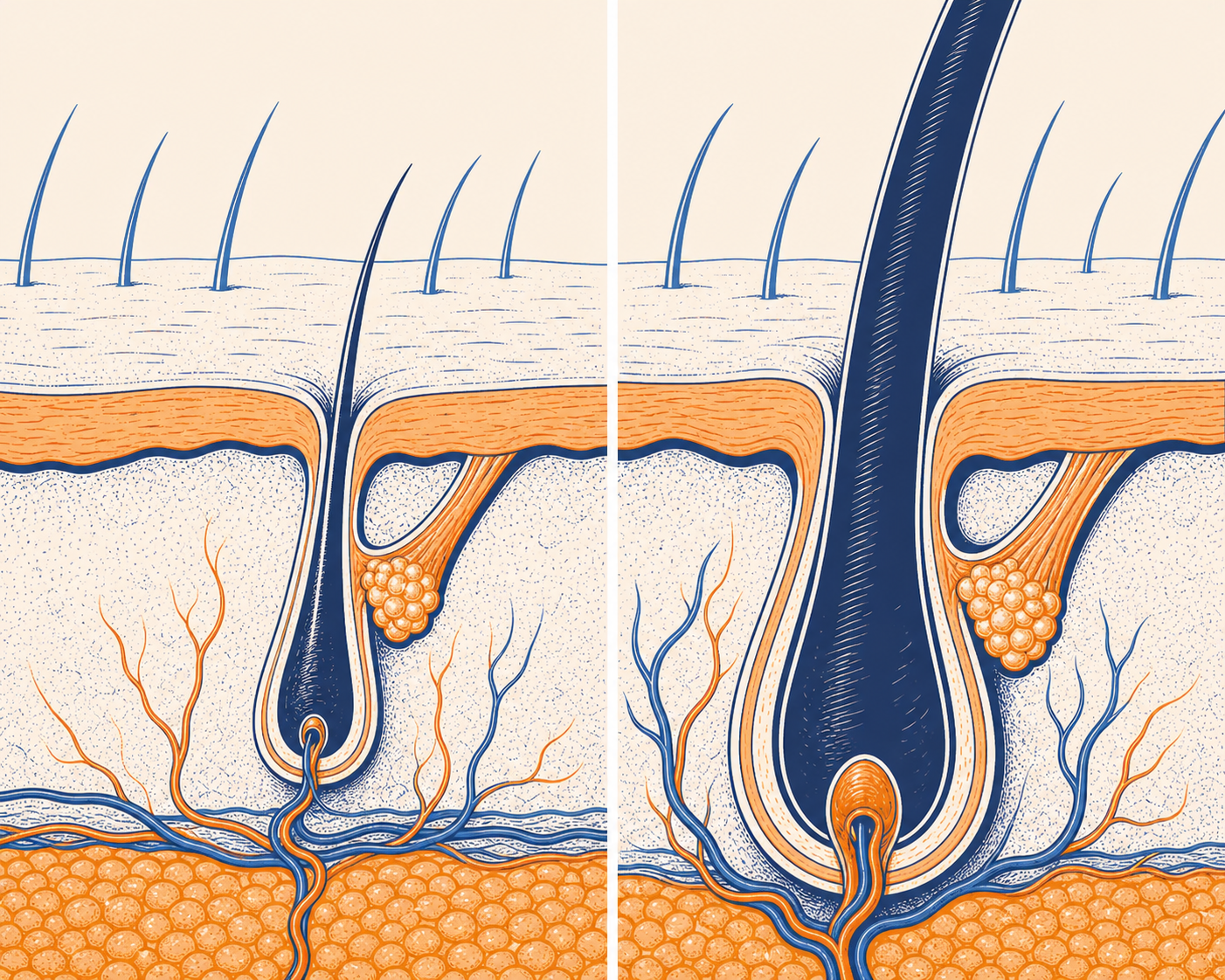
This is called treatment-induced shedding, a form of telogen effluvium. As the treatment pushes dormant follicles into active growth, it forces out older resting hairs to make room for thicker strands. Shedding may start within the first few weeks of use, though timing varies from person to person.
Stopping treatment at this point is the most common mistake people make. For many people, the shed settles within a few months as the hair cycle stabilizes, with thicker regrowth following behind it. If shedding continues or seems to worsen instead of leveling off, our guide on finasteride shedding vs thinning can help you tell the difference, and it's worth mentioning to your prescriber for a dose review.
What Happens to Your Hair When You Stop Minoxidil
This type of treatment does not treat the underlying cause of androgenetic alopecia, the genetic and hormonal process that shrinks hair follicles over time (learn more about the genetics of hair loss). It only maintains growth while in use. Stop, and those hairs return to whatever path they were already on.
Shedding may ramp up in the weeks after stopping, then gradually settles as the scalp returns to its natural cycle. How quickly this unfolds depends on individual genetics and how early treatment was started. This reflects the reversal of a temporary boost, not new damage.
Weight gain from this oral treatment follows a similar pattern in reverse. Since it comes from fluid retention and not fat, the extra water weight typically resolves once treatment stops.
Talk to your prescriber before stopping. They can help you weigh whether tapering makes sense and set expectations for the months ahead.
Who Should Be Cautious About Oral Minoxidil
Certain health conditions raise the risk profile with this type of oral hair loss treatment, so knowing where you stand matters before starting. A licensed healthcare provider will review your health history before any treatment begins.
- Heart conditions: This type of oral hair loss treatment widens blood vessels throughout the body, which can strain a heart already struggling with fluid overload, especially with heart failure or fluid buildup around the heart.
- Kidney disease: The kidneys manage the sodium and water retention this treatment triggers, and impaired function makes that balance harder to maintain.
- Uncontrolled blood pressure: Whether too high or too low, this deserves a closer look since this treatment directly affects blood pressure regulation.
- People taking certain medications: This treatment can interact with other blood pressure treatments, including beta-blockers and other vessel-widening medications, which may add up to a bigger drop in blood pressure than expected. Diuretics prescribed to offset treatment-related fluid retention also need monitoring so they don't overcorrect. Share your full medication list with your prescriber before starting oral hair loss treatment.
- Women: Fluid retention tends to appear at lower doses than in men, so flag this early with your prescriber.
None of this rules out oral hair loss treatment for these groups. It means a licensed healthcare provider needs your full health history before deciding what fits your situation, including whether an alternative like finasteride prescription online might be a better fit.
How to Manage Weight Gain and Fluid Retention on Oral Minoxidil
A few strategies can help keep fluid retention in check while you stay on oral hair loss treatment, though none of them are things to try on your own.
- Diuretics: A licensed healthcare provider may prescribe a diuretic alongside your hair loss treatment. These help the kidneys release excess sodium and water, offsetting the fluid retention this treatment can trigger.
- Dose adjustments: Since fluid retention scales with dose, lowering the amount you take often reduces swelling without giving up the benefits for your hair.
- Weight tracking: Tracking weight regularly during the first few weeks gives your provider useful data. A sudden jump of several pounds in a short window usually points to fluid, not fat.
- Sodium awareness: Cutting back on high-sodium foods can ease how much water your body holds onto, best paired with medical guidance and not used on its own.
Seek immediate care if you notice:
- Rapid weight gain of more than 5 pounds in a single day
- Shortness of breath at rest or when lying flat
- Chest pain or pressure
- Severe swelling in the legs that leaves a dent when pressed
These symptoms call for stopping treatment and getting prompt medical attention rather than waiting for a callback. For more routine swelling, rapid weight changes, or mild shortness of breath, contact your provider instead of adjusting your dose yourself. They can decide whether a diuretic, a lower dose, or a different approach fits your situation.
Getting a Hair Loss Prescription in Canada
In Canada, oral hair loss treatment requires a prescription from a licensed healthcare provider, so it cannot be purchased over the counter. Men's online health clinics, including Phoenix's hair loss treatment online, make that process accessible without an in-person visit or video call: you fill out a secure health questionnaire, a licensed Canadian healthcare provider reviews your medical history, and a prescription is issued if treatment is clinically appropriate. Health history matters here, since providers screen for contraindications like heart conditions, kidney disease, or uncontrolled blood pressure before prescribing. If approved, treatment ships in plain, unbranded packaging directly to your home. Because fluid retention and other side effects can appear after starting, the ongoing text-based access to your provider lets you flag changes early and adjust your plan without booking another appointment.
Final Thoughts on Minoxidil, Weight Gain, and What to Expect
Most of what people call weight gain on this type of oral hair loss treatment is water, and it tends to go away on its own once treatment stops or the dose gets adjusted. The bigger picture is that side effects like fluid retention are manageable when you go in with accurate expectations and a licensed healthcare provider in your corner. The body's response is individual, so tracking changes early gives you and your provider the best information to work with.
FAQ
Does oral hair loss treatment cause weight gain, or is it just water retention?
Oral hair loss treatment can cause the scale to climb, but the weight comes from fluid retention, not fat. The treatment widens blood vessels, which prompts the kidneys to hold onto extra sodium and water (a process called edema), not increased fat mass. Some clinical research suggests fluid retention affects a minority of patients on oral hair loss treatment, with higher rates reported in women and at higher doses, though estimates vary across studies.
Does minoxidil cause hair loss, or is early shedding a sign it's working?
This treatment does not cause permanent hair loss. Early shedding is a temporary phase called telogen effluvium that typically signals the treatment is working. As follicles shift into active growth, older resting hairs are pushed out to make room for thicker strands. For most people, shedding settles within a few months, with visible regrowth following behind it.
Oral vs topical hair loss treatment: which is more likely to cause side effects like weight gain and unwanted hair growth?
The oral form carries a higher side effect risk than the topical form because more of it reaches your bloodstream. The topical form absorbs at low systemic levels, and fluid retention has not been reported as a side effect with that form. The oral form, by contrast, affects blood vessels and kidneys throughout your body, and a 2025 review in the American Journal of Clinical Dermatology found hypertrichosis (unwanted hair growth on the face, arms, or back) affects roughly 24 percent of patients on the oral form.
How do I avoid weight gain and manage fluid retention while taking oral minoxidil?
Your provider may prescribe a diuretic to offset sodium and water retention, or lower the dose, since fluid buildup scales with the amount taken. Tracking weight in the first few weeks gives your provider useful data: a sudden jump of several pounds in a short window usually points to fluid, not fat.
How do I get a prescription for oral hair loss treatment in Canada without visiting a healthcare provider in person?
Men's online health clinics connect you with licensed Canadian healthcare providers who review a secure health questionnaire and determine whether oral hair loss treatment is appropriate for your situation, with no in-person visit or video call required. If a prescription is issued, treatment ships in discreet, plain packaging directly to your door. The same medical standards apply as a traditional clinic, including a review of your health history for contraindications like heart conditions, kidney disease, or uncontrolled blood pressure.

Recommended Articles

Tirzepatide vs Semaglutide: What to Know
Understand how tirzepatide and semaglutide work, how Health Canada reviewed each, and what providers consider before prescribing either.

Last Longer in Bed: What Actually Works
Learn proven ways to last longer in bed in September 2026, from stop-start training and pelvic floor exercises to lifestyle changes.

Preserving Muscle While Losing Weight on GLP-1
Learn how Canadian men can protect lean muscle on GLP-1 treatment using protein targets and resistance training.