
Finasteride Shedding vs. Thinning: How to Tell the Difference
- Jump to a Section:
Noticing more hair in the shower or on the pillow after starting treatment tends to trigger a pretty immediate panic. It feels like the opposite of what was supposed to happen. But there's a real difference between a temporary shed and hair thinning that keeps progressing, and knowing which one you're dealing with makes it a lot easier to stay the course or flag something to your provider.
TLDR:
- DHT shrinks hair follicles through miniaturization; prescription hair loss treatment targets the enzyme that produces DHT.
- Early shedding after starting treatment is typically diffuse and temporary; ongoing thinning concentrated at the crown or hairline warrants provider review.
- Hold off on judging your results before the 3 to 6 month mark, as follicle cycles move slowly and early conclusions are typically wrong.
- Known risks include sexual side effects, and a small number of men report symptoms that continue after stopping treatment, which is worth raising with a provider.
- Men's online health clinics connect you with a licensed Canadian healthcare provider through a secure text-based questionnaire, no video call required.
How Prescription Hair Loss Treatment Works on Hair Follicles
Male pattern baldness comes down to one hormone: DHT (dihydrotestosterone). DHT forms when testosterone interacts with an enzyme called 5-alpha reductase. In men with a genetic sensitivity to DHT, this hormone binds to receptors in the scalp and gradually shrinks hair follicles, a process called the stages of male pattern hair loss.
Prescription hair loss treatments work by targeting that enzyme directly. By reducing how much testosterone converts into DHT, these treatments lower DHT levels at the follicle and slow the shrinking process driving thinning at the crown and hairline.
This is a hormonal approach, not a topical one. It works on the root cause of miniaturization, going beyond the visible symptoms on the scalp. Understanding this mechanism matters: as follicles adjust to a lower DHT environment, some men may notice temporary changes in their hair before things stabilize.
Why Treatment Shedding Happens
Hair loss treatments work by targeting the enzyme that produces DHT, and that hormonal shift affects all follicles on the scalp at once, including those in a resting phase. When DHT levels drop, follicles that had been sitting dormant are signalled to re-enter the active growth cycle. To do that, they first need to shed the old, resting hair still sitting in the follicle. This synchronized exit of resting hairs is what causes the noticeable increase in shedding early in treatment. The shed hairs themselves are typically thin, short, or club-shaped: signs of a follicle resetting and not continuing to miniaturize. Because the process affects multiple follicles cycling through together, the shed can look alarming even though it reflects the treatment engaging with the follicle cycle, not working against it.
When Treatment Shedding Starts and How Long It Lasts
For most men, noticeable shedding may begin within the first several weeks of starting treatment, as the drop in DHT levels prompts resting follicles to cycle through together and release old hairs. Some men notice an uptick early on, though a more pronounced shed typically develops within the first one to two months as the hormonal shift reaches more follicles across the scalp. The shed generally tapers as the follicle cycle stabilizes: most men find shedding settles within a few months of starting treatment. A smaller number of men may experience shedding that takes longer to resolve before the cycle stabilizes, which can look alarming but often still reflects follicles resetting and not continuing to miniaturize. After the shed phase resolves, early regrowth, typically finer, shorter hairs cycling in, tends to become visible in the 3 to 6 month window, with more substantial density changes typically requiring longer consistent use to fully show.
Treatment Shedding vs. Ongoing Hair Thinning: How to Tell the Difference
Telling normal shedding apart from thinning that keeps progressing comes down to a few observable patterns, not guesswork.
| Sign | Temporary Shedding | Ongoing Thinning |
|---|---|---|
| Pattern | Diffuse, scattered across the scalp | Concentrated at hairline or crown |
| Hair character | Thin, short, or club-shaped strands | Mix of textures, no new growth replacing loss |
| Duration | Weeks, then tapers off | Continues month after month |
| Density trend | Stabilizes or improves after several months | Keeps declining with no thickening |
If shedding tapers off and finer hairs start growing in around the hairline or crown, that usually signals follicles cycling into a growth phase. If loss keeps accelerating or bald patches form with no regrowth, which may signal different types of alopecia, it is worth flagging to your provider. A licensed Canadian healthcare provider can review your progress and determine whether an adjustment to your treatment plan makes sense for your situation.
What to Expect at Each Stage of Finasteride Treatment
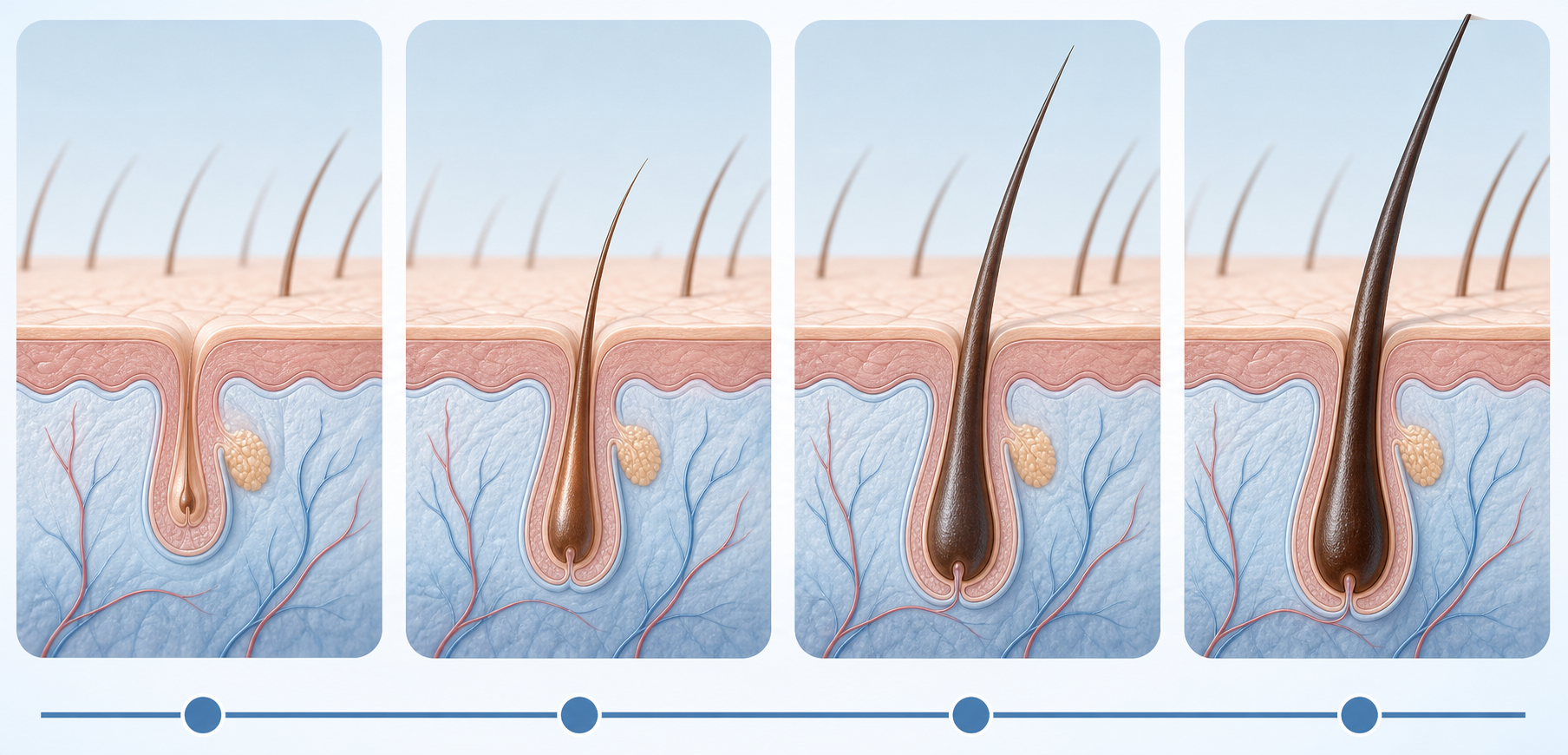
The first couple of months are typically the most disorienting. DHT levels drop, resting follicles begin cycling through together, and the shed phase described above gradually tapers as the follicle cycle adjusts: this is the stage most men find hardest to sit through, because the visible change feels like the wrong direction. As shedding slows, follicles begin to stabilize in the lower DHT environment. Around months three to six, finer, shorter hairs begin cycling into the growth phase at the hairline and crown, with clinical data suggesting roughly 70% of men notice visible regrowth within that window, and this early regrowth is often subtle and easiest to catch in monthly comparison photos, not day-to-day mirror checks. From there, density improvements tend to become more visible as those follicles complete full growth cycles and produce progressively thicker strands. Consistent, uninterrupted use through the full treatment window matters: stopping and restarting resets the process and does not pick up where it left off.
Known Side Effects and Risks to Understand Before Starting
Prescription hair loss treatments carry known risks beyond temporary shedding, and a balanced view matters before starting one. Sexual side effects are the most commonly reported, including reduced libido and erectile difficulties, along with mood changes that some men notice within the first months of use.
A licensed Canadian healthcare provider can review your full medical history and discuss these risks in plain terms, including treatment costs. Bringing questions about side effects to that conversation is a reasonable step, not an overreaction.
Managing the Shedding Phase
Watching more hair fall out while trying to trust a treatment is hard. A few practical habits can make that stretch easier to get through.
- Take photos monthly, same lighting, same angle, same time of day. Mirrors lie because you check them daily and miss gradual change.
- Hold off on judgment before the 3 to 6 month mark. Follicle cycles move slowly, and early conclusions are usually wrong.
- Keep a simple log of shedding intensity week to week. Patterns matter more than any single bad day in the shower.
- Stick to the same routine every day. Prescription hair loss treatments need regular use to maintain their effects, and stopping and restarting resets progress instead of protecting it.
- Bring your photos and notes to follow-up consults so your provider has real data instead of a general impression.
Consistency is the variable you control. Genetics and timing are not.
Getting a Finasteride Prescription Without an In-Person Visit
Getting prescription hair loss treatments for men online no longer requires sitting in a waiting room or explaining a sensitive concern face to face. A legitimate medical hair loss clinic in Canada uses a secure, text-based health questionnaire covering your medical history, current medications, and specific concerns about thinning or shedding.
A licensed Canadian healthcare provider reviews that questionnaire and checks for contraindications before deciding whether prescription treatment fits your situation. No video call is required. The exchange happens through encrypted messaging, which many men prefer when discussing something personal.
If the provider determines treatment is appropriate, a prescription can be filled through discreet hair loss prescription delivery via a licensed Canadian pharmacy, with follow-up messaging available for later questions. This process follows the same clinical standards as an in-person visit.
How Men's Online Health Clinics Connect Canadian Men with Hair Loss Treatment
Ongoing support is available through encrypted text messaging, so you can follow up with your provider at any time: whether that's a question about shedding in the first weeks or a check-in on progress at the six-month mark. The clinical standards applied to your assessment are the same as those at an in-person appointment; what changes is the setting and the removal of friction that keeps many men from seeking care in the first place.
Final Thoughts on Hair Thinning and Finasteride Shedding
Understanding why shedding happens makes it easier to stay the course when it does. Your follicles need time to cycle through, and the 3 to 6 month mark is when the picture usually starts getting clearer. A licensed Canadian healthcare provider can help you read what you're seeing and decide whether your plan needs any changes.
FAQ
When does finasteride shedding start, and how long does it typically last?
This type of shedding can start within the first few weeks of treatment, as lower DHT levels push resting follicles into a new growth cycle and old hairs exit together. For most men, this phase tapers off within a few months, though for some it may take longer before shedding stabilizes. If shedding continues without any signs of new growth, it is worth reviewing with your licensed healthcare provider.
Is hair still thinning on finasteride a sign the treatment isn't working?
Continued thinning in the first 3 to 6 months does not always mean treatment is failing. Follicle cycles move slowly, and visible improvement may take several months of consistent use, with more meaningful density changes often requiring longer. The key distinction is pattern: temporary shedding tends to be diffuse and eventually tapers, while ongoing thinning concentrated at the crown or hairline with no regrowth may signal the treatment needs adjustment. Monthly photos taken in consistent lighting give you and your provider real data to work with, not a day-to-day impression.
What's the difference between treatment shedding vs. hair loss that keeps progressing?
The shedding phase is usually diffuse, short-lived, and followed by finer hairs cycling into a growth phase, while ongoing hair loss tends to concentrate at the hairline or crown with no new growth replacing what falls out. Tracking the duration and pattern over several months is the most reliable way to tell them apart. If loss keeps accelerating or bald patches form after 6 months on treatment, a licensed healthcare provider can assess whether a plan adjustment makes sense.
How do I get a finasteride prescription for hair thinning without visiting a doctor in person?
See the prescription process section above for full details. No in-person visit or video call is needed, and the same clinical standards apply as an in-person appointment.
Can treatment shedding start immediately after the first week, or does it take longer?
For some men, shedding may begin within the first couple of weeks as DHT levels drop and follicles respond to the hormonal shift. Most men, though, tend to notice the shed more clearly within the first one to two months as more follicles enter the transition phase simultaneously. Early shedding is generally a sign the treatment is engaging the follicle cycle, not a reason to stop.
Medically reviewed by


Recommended Articles

Online Weight Loss Programs in Canada: What to Know Before You Start
Considering an online weight loss program in Canada? Learn how medical weight management works, eligibility, costs, safety and what to look for.

7 Reasons Men Struggle to Lose Weight (and What Can Help)
Weight loss can stall for reasons beyond willpower. Learn 7 common barriers for men, from appetite and sleep to movement, muscle and medical factors.

Viagra and Cialis Combined: Risks and Facts
Can Viagra and Cialis be combined? Learn why it raises serious risks and what a healthcare provider recommends instead. August 2026.