
Hat Hair Thinning Myth: Real Causes Explained
- Jump to a Section:
So your hairline is changing and you wear hats a lot. It's easy to connect those two things, but the evidence doesn't support it. Men who are already experiencing DHT-driven recession often start wearing hats daily to conceal it, which creates a false appearance of a hat-to-hair-loss link in everyday observation. Hair specialists and hair loss researchers consistently find no causal connection between hat wear and androgenetic alopecia once genetics are accounted for. Understanding that distinction is what actually helps you do something about it.
TLDR:
- Wearing a hat does not cause hair thinning; about 95 percent of hair thinning in men traces to androgenetic alopecia, per NIH's Endotext resource.2
- Tight hats worn for months or years can, in rare cases, contribute to traction alopecia, but casual wear carries no such risk.
- Hats can trap heat and moisture, raising the chance of folliculitis, a hygiene issue that clears up once the trigger is removed.
- Watch for temple recession or crown thinning as early signs; these connect to hormones and genetics, not headwear.
The Hat-Hair Loss Myth Explained
Wearing a hat, on its own, will not cause hair thinning. That holds true whether you wear a ball cap daily or a beanie every winter. Cleveland Clinic notes that studies on the topic are mixed1, but concerns usually involve hats worn very tight and very often, not casual wear.
The myth likely persists because of a mix up between cause and effect. Men who notice thinning at the crown or hairline often reach for a hat to cover it up, not the other way around. Genetics and hormones are typically the real cause, but a hat is easier to blame.
What Actually Causes Hair Thinning in Men
Male pattern baldness, or androgenetic alopecia, causes about 95 percent of hair thinning in men, per NIH's Endotext resource2. DHT and androgenetic alopecia are well documented in NIH research: the hormone gradually shrinks hair follicles until they stop producing strands. Genetics decide how sensitive the follicles are, so onset varies widely: some men notice thinning earlier in adulthood, while others keep fuller hair much later in life. Some men may notice thinning by their mid-thirties, following the 7 stages of male pattern baldness: temples first, then crown.
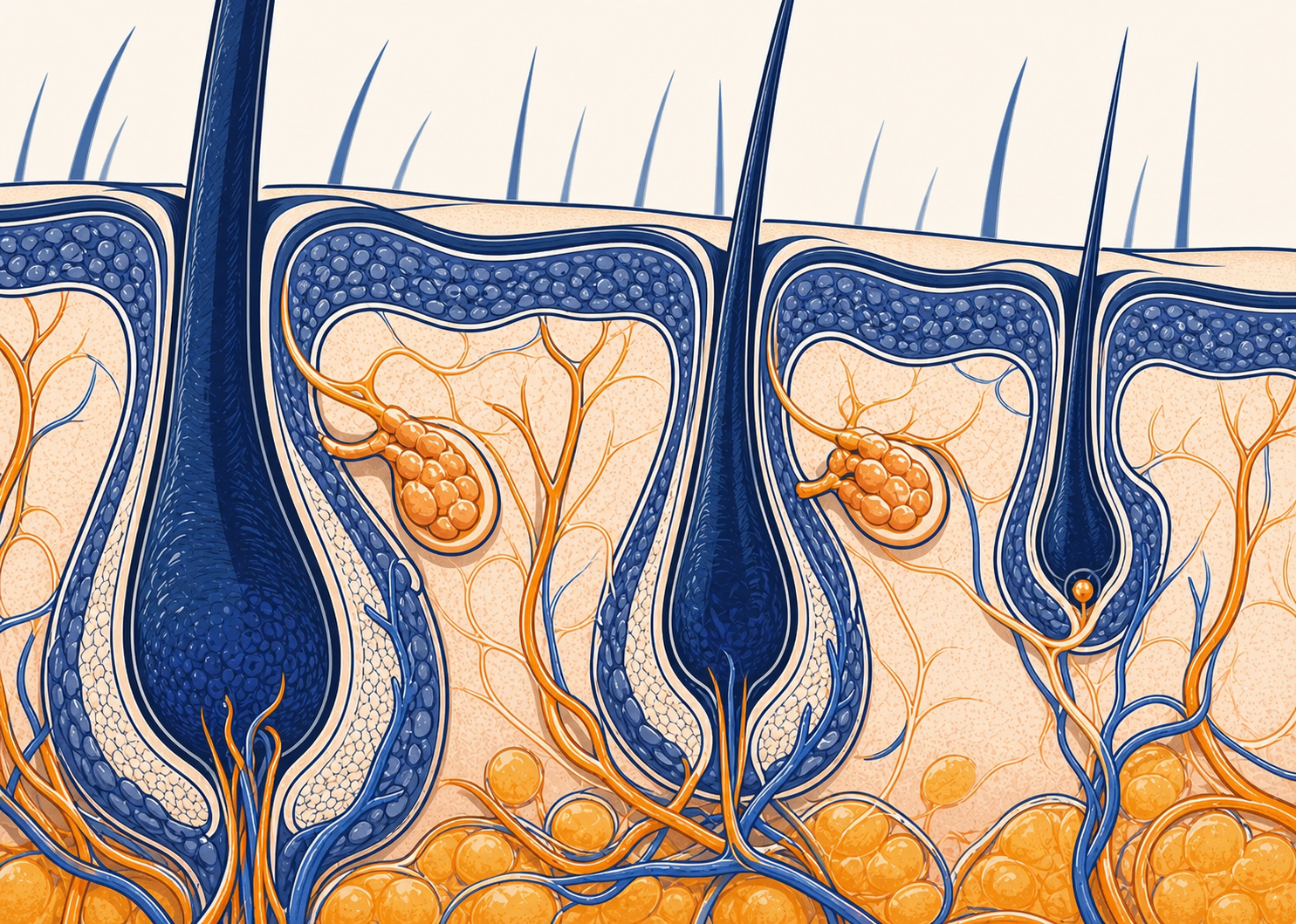
Genetics are the dominant factor, but a few others matter too:
- Telogen effluvium, a temporary shedding phase often triggered by illness, surgery, or a major life stressor
- Nutritional deficiencies, including low iron or protein intake
- Certain prescription treatments, such as those for blood pressure, thyroid conditions, or chemotherapy, that interfere with normal hair growth cycles
None of these involve headwear. They involve hormones, genetics, and what is happening inside the body.
The Three Main Types of Hair Loss
Not all hair loss looks or behaves the same way, and knowing the different types of alopecia helps you figure out where a hat could realistically fit into the picture.
- Androgenetic alopecia: the genetic, hormone driven type covered above. It follows a set pattern, temples and crown for men, and progresses gradually over years.
- Telogen effluvium: temporary shedding triggered by illness, surgery, or stress, where hair usually grows back once the trigger resolves.
- Traction alopecia: hair loss from repeated pulling or tension on the follicle, often linked to tight hairstyles. This is the only type tied to physical tension on the scalp, making it the one most relevant for hat wearers.
Can Tight Hats Contribute to Traction Alopecia?
Tight hats can, in rare cases, contribute to traction alopecia, a form of hair loss from repeated pulling force on the follicle. The American Academy of Dermatology on traction alopecia identifies tight hairstyles and accessories with chronic tension as a real cause3. Traction alopecia from headwear alone is uncommon; it shows up far more often from tight braids, ponytails, or extensions worn constantly.
The risk depends more on fit and duration than on hat type. A standard baseball cap or beanie worn at a comfortable fit poses no meaningful risk. A very tight fitted cap or compression-style headband worn for many hours daily over months may carry a low but real chance of hairline tension. Wearing tight headbands or hat liners on top of already tight hairstyles adds tension from both sources at once. In every case, the hat's fit is the key variable, not the style of hat itself.
How Hats Affect Scalp Health and Hygiene
A hat traps heat and moisture against your scalp, especially during long wear or a sweaty workout. That warm, damp environment invites bacteria and fungi, making folliculitis, an inflammation of the hair follicles causing redness, bumps, or itchy scalp hair loss, more likely with dirty headwear. This is a hygiene issue, not a sign follicles are shutting down. Folliculitis clears up once you remove the trigger, unlike androgenetic alopecia, which involves permanent follicle shrinkage from hormones and genetics.
A separate concern is mechanical hair shaft damage. Friction from rough hat liners, or repeatedly pulling a tight hat on and off, can cause hair to break at the shaft, making it look thinner or shorter in affected areas. This is a cosmetic issue with no impact on the follicle itself. Breakage stops once the friction source is removed and the hair grows back normally. It is worth distinguishing this from true hair loss, which starts at the follicle.
A few habits keep your scalp healthier:
- Wash ball caps and beanies regularly, especially ones worn during exercise
- Avoid wearing the same damp hat multiple days in a row
- Let your scalp air out at home instead of keeping a hat on for hours
- Choose breathable fabrics like cotton over synthetic materials that trap heat
Does a Hat Block Blood Flow to Hair Follicles?
A hat cannot cut off blood flow to your follicles just by sitting on your head. This claim gets repeated often, but the anatomy does not support it.
Follicles sit deep in the dermis, fed by a dense network of tiny blood vessels. Reaching that layer would take far more pressure than any cap or beanie applies, since even a snug hat spreads its weight across your scalp instead of pressing one spot.
If circulation were truly blocked, you would notice numbness or a headache long before any hair changes.
The Real Warning Signs of Hair Thinning to Watch For
Real thinning shows up in patterns, not sudden bald patches, and catching it early makes a difference in how your provider approaches treatment.
Watch for these signals:
- Temple recession, where the hairline pulls back into an "M" shape, often the first change you will notice
- Crown thinning, a widening part or a spot at the back of your head showing more scalp than before
- More shedding than usual, noticeable on your pillow, in the shower drain, or on your hairbrush. treatment-related shedding vs. thinning can look similar and can be hard to tell apart without a provider assessment
- Hair that looks finer, shorter, or less dense in affected areas, even if total count has not dropped yet
None of these connect to how often you wear a cap. They connect to what is happening at the follicle level, where genetics and hormones do their work over months and years. If a change persists, flag it to a legitimate medical hair loss clinic, not your headwear collection.
How to Wear Hats Without Worrying About Your Hair
A few practical habits let you wear hats daily without a second thought.
- Choose a fit that sits snug but does not pinch. After wearing the hat for a while, take it off and check for a visible red indentation line on your forehead or temples. If that line takes noticeably long to fade, or if you feel scalp pressure or a mild headache during wear, size up.
- Pick breathable fabrics like cotton or mesh over tight synthetic blends that trap heat against your scalp.
- Wash your hats often, especially if you wear them during workouts or in hot weather.
- Give your scalp a few hours a day without headwear, particularly after sweating.
- Rotate between a few hats so each gets time to dry out fully, instead of wearing the same one daily.
This is about scalp hygiene, not hair loss prevention, and it applies whether you wear a cap weekly or daily.
When Hair Loss Is a Sign of Something Else
Sometimes thinning hair points to something happening elsewhere in the body, not genetics or a hat. Thyroid disorders, whether underactive or overactive, may slow hair growth cycles. If you're considering hair growth treatment online in Canada, a provider can help distinguish this from androgenetic alopecia. Iron deficiency and hormonal changes unrelated to DHT may trigger similar shedding.
These causes get mistaken for pattern baldness often, mostly because the end result looks similar. The difference is in pattern and speed:
- Sudden, diffuse shedding across your whole head, not a receding hairline or thinning crown, is worth paying attention to.
- Shedding alongside fatigue or weight changes suggests a professional assessment makes more sense than guessing, since a provider can check for underlying causes through bloodwork.
Hair Loss Treatment Options for Men in Canada
Once you rule out your hat as the cause, the real question becomes what to do about hormone driven thinning. Prescription treatments in Canada fall into two categories, each working through a different mechanism.
- DHT-blocking prescription treatment targets the hormone responsible for shrinking follicles, working best when started before follicles become dormant.
- Growth-stimulating prescription treatment works through improved circulation to the scalp, supporting the follicle's active growth phase so existing hair can appear fuller over time.
Both categories require a prescription. Learning about men's prescription hair loss treatments online can help, since genetics and the stage of thinning affect how well each approach works for a given individual.
How Men's Online Health Clinics Provide Hair Loss Care
Phoenix is a men's online health clinic that connects Canadian men with licensed healthcare providers for hair loss care. The process starts with a short, confidential online health assessment that takes a few minutes to complete and requires no in-person appointment or family doctor referral. A licensed Canadian healthcare provider reviews the submitted information and, if treatment is clinically appropriate, creates a personalized treatment plan. If a prescription is issued, treatment ships in plain, unbranded packaging from a licensed Canadian pharmacy partner, typically arriving within two to three days. Patients can message their provider through a secure platform at any time to ask questions or adjust their plan. No waiting rooms, no pharmacy trips, and no referrals are needed to get started.
Final Thoughts on What Actually Causes Hair Thinning in Men
The hat is not the culprit. DHT, genetics, and follicle sensitivity drive male pattern thinning. If changes in your hairline or crown are showing up, a licensed healthcare provider can give you a clearer picture of what is driving it and what your options are.
FAQ
Does wearing a hat cause hair thinning?
No, wearing a hat does not cause hair thinning. Hair thinning in men is a hormone-driven process where DHT gradually shrinks follicles over time; headwear plays no role in that. The association likely persists because men often reach for a hat to cover thinning they have already noticed, not because the hat caused it.
Can a tight hat give you traction alopecia?
Yes, in rare cases with very tight, daily wear over months. Casual wear poses no meaningful risk. See the traction alopecia section above for the full breakdown.
What actually causes hair thinning in men if hats aren't the issue?
Male pattern baldness, driven by DHT sensitivity in the follicles, accounts for the vast majority of hair thinning in men. Other causes include telogen effluvium triggered by illness or stress, nutritional deficiencies like low iron, thyroid disorders, and certain prescription treatments that interfere with normal hair growth cycles. If you notice diffuse shedding across the whole scalp instead of a receding hairline or crown thinning, a healthcare provider can check for underlying causes through bloodwork.
How do I know if my hair thinning needs treatment or will resolve on its own?
Gradual thinning that follows a predictable pattern (temples receding into an "M" shape or a widening part at the crown) points to androgenetic alopecia, which progresses without treatment. Sudden, diffuse shedding across your whole scalp, especially when paired with fatigue or weight changes, is more likely temporary and worth investigating with a licensed healthcare provider. Because DHT-related follicle shrinkage becomes harder to reverse over time, starting treatment earlier gives you more options.
What prescription hair loss treatment options are available for Canadian men online?
Prescription treatments fall into two categories: DHT-blocking treatments that target the hormonal cause of follicle shrinkage, and growth-stimulating treatments that support blood flow to the scalp's active growth phase. Both require a licensed healthcare provider to assess the patient's pattern and medical history before prescribing. Men's online health clinics connect Canadian men with licensed providers who can review your situation and determine which approach fits the stage of thinning.
Can wearing a hat damage a hair transplant or donor area?
Before a transplant, hat wear poses no risk to the donor area. Androgenetic alopecia works at the follicle level through hormones and genetics, so a cap sitting on your head has no bearing on whether you are a good transplant candidate. After a transplant, surgeons typically advise avoiding tight hats for a short period afterward to avoid pressure on newly placed grafts, but that is a short-term post-surgical precaution and not evidence that hats harm normal hair. Once the scalp is fully healed, regular hat wear does not threaten transplant results.
References
- Cleveland Clinic. Can Wearing a Hat Cause Hair Loss? Cleveland Clinic Health Essentials. Available at: health.clevelandclinic.org/can-wearing-a-hat-make-you-go-bald
- Ho CH, Sood T, Zito PM. Androgenetic Alopecia. In: StatPearls [Internet]. Treasure Island (FL): StatPearls Publishing; 2024. National Library of Medicine. Available at: ncbi.nlm.nih.gov/books/NBK430924/
- American Academy of Dermatology. Hairstyles that pull can lead to hair loss. Available at: aad.org/public/diseases/hair-loss/causes/hairstyles

Recommended Articles

Ozempic Online in Canada: What to Know in 2026
Order Ozempic online in Canada through a licensed healthcare provider. See pricing for brand and generic semaglutide, and how the assessment works.

What Makes GLP-1 Different for Men
GLP-1 treatment works differently in men. Key factors like muscle loss, side effects, and Canadian access options explained.

Online Weight Loss Programs in Canada: What to Know Before You Start
Considering an online weight loss program in Canada? Learn how medical weight management works, eligibility, costs, safety and what to look for.