
Itchy Scalp Hair Loss: What to Know
- Jump to a Section:
If you've been scratching your scalp and watching your hair thin out, your first instinct might be to grab a new shampoo and hope for the best. The itch and the hair loss are usually tied to the same underlying issue, and knowing which one you're dealing with makes all the difference in how you treat it.
TLDR:
- An itchy scalp rarely causes hair loss directly; both symptoms typically trace back to the same underlying inflammation.
- Seven scalp conditions, including dandruff, alopecia areata, and lichen planopilaris, can produce itching and shedding at the same time.
- Scarring conditions like folliculitis can permanently destroy follicles if left untreated, while non-scarring conditions typically allow regrowth once treated.
- Medicated shampoos formulated for scalp conditions can help manage itch and flaking at home.
- A licensed healthcare provider can assess both scalp and hair loss symptoms together to identify the shared underlying cause.
The Link Between an Itchy Scalp and Hair Loss
An itchy scalp and thinning hair often show up together, and it is easy to assume one causes the other. Scalp pruritus, the clinical term for scalp itching, affects roughly 25%[1] of the general population. Yet the itching itself is rarely the reason hair falls out.
More often, both symptoms trace back to the same source: inflammation. Conditions like dandruff, psoriasis, or an irritated scalp barrier can trigger itchiness while also disrupting the hair follicle's growth cycle. The itch is a signal, not the mechanism.
That distinction matters because it changes where you focus your attention. Treating the itch alone while ignoring its cause can let inflammation keep affecting your follicles after the itching settles. A licensed healthcare provider can help figure out whether an inflammatory condition is driving both symptoms at once.
Common Causes of Itchy Scalp and Hair Loss
Several distinct scalp conditions can produce both itching and hair loss at once. Recognizing which one matches your symptoms can help you talk through options with a licensed healthcare provider.
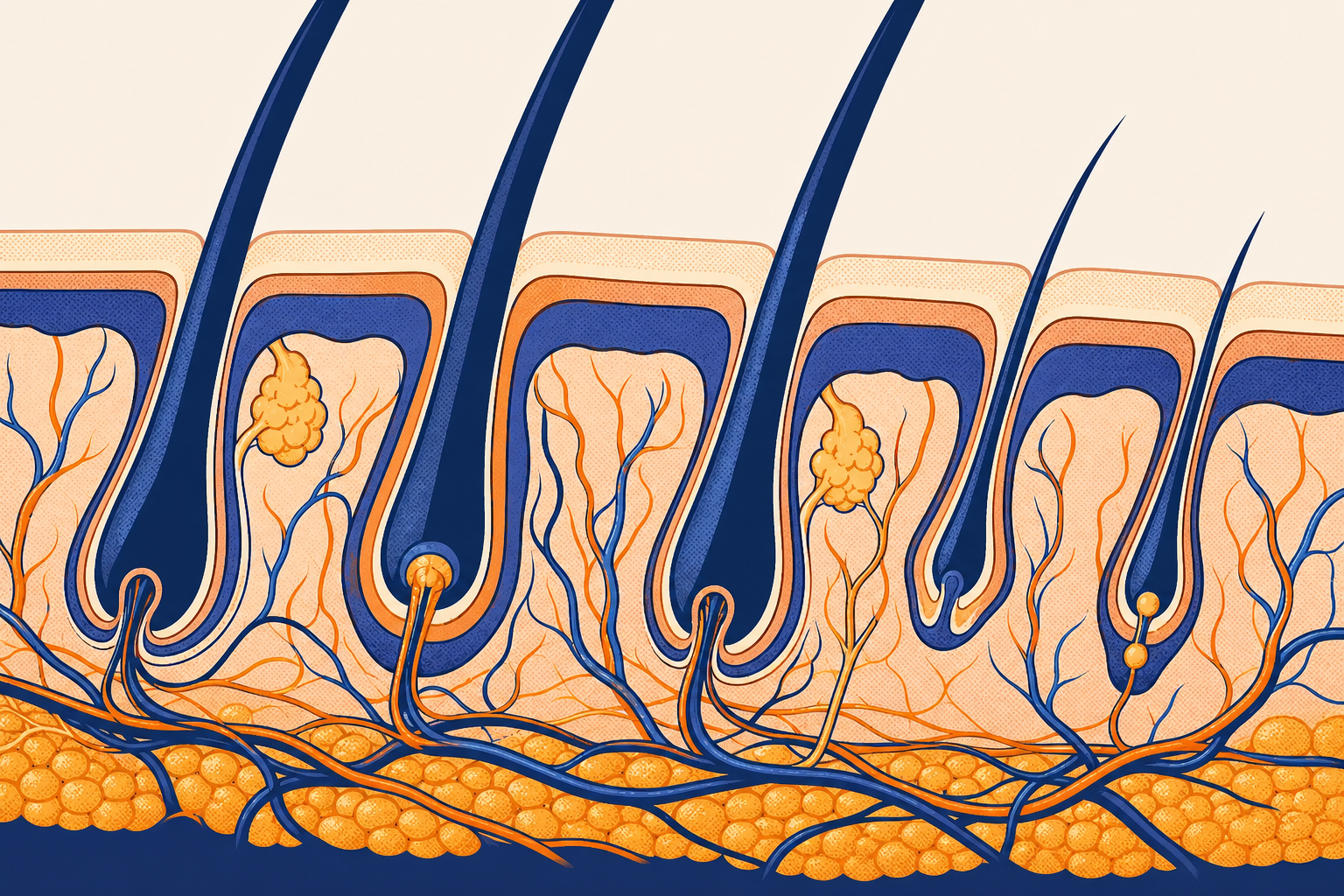
- Dandruff and seborrheic dermatitis: excess oil and yeast overgrowth irritate the scalp, causing flaking and itch that can weaken the follicle environment over time.
- Scalp psoriasis: thick, scaly patches form as skin cells turn over too fast. Persistent scratching and inflammation around these patches can contribute to shedding.
- Alopecia areata: an immune condition where the body attacks hair follicles, sometimes with tingling or itching in the patches before hair falls out.
- Scalp folliculitis: inflamed or infected hair follicles create small, itchy bumps. Repeated flare-ups left untreated can damage follicles.
- Tinea capitis (ringworm): a fungal infection causing itchy, scaly patches that can lead to hair breakage or loss in the infected area.
- Allergic contact dermatitis: reactions to hair products or dyes can inflame the scalp, producing itch alongside temporary shedding.
- Lichen planopilaris: an inflammatory condition targeting hair follicles directly, often causing itching, burning, and permanent follicle damage if untreated.
Itching is a recognized symptom across several primary scalp disorders linked to hair loss.[3]
How Scratching Makes Hair Loss Worse
Scratching does more damage than most people realize. It works as a mechanical stressor on hair that is already weakened by inflammation underneath the scalp surface.
Under normal circumstances, you lose 50 to 100 hairs a day[2] as part of the natural growth cycle. That number climbs when scratching enters the picture. Repeated friction can pull hairs out before they are ready to shed, loosen the follicle's anchor point, and create small wounds that invite further irritation. Understanding the 7 stages of male pattern baldness can help you gauge where hair loss currently stands.
There is also a cycle worth watching for. Itching leads to scratching, scratching increases inflammation, and that inflammation makes the scalp itch more. Each round leaves the follicle environment a little less stable than before.
Breaking that cycle usually means treating the underlying condition, not the scratching alone. Once the itch fades, the physical strain on your follicles fades with it.[4]
Scarring vs. Non-Scarring Hair Loss: Why the Distinction Matters
Whether hair grows back often comes down to one question: has the follicle itself been destroyed, or just disrupted.
Non-scarring hair loss keeps the follicle intact underneath the irritation. Seborrheic dermatitis and dandruff fall into this camp. They inflame the skin around the follicle and can speed up shedding, but the follicle's structure stays whole. Once the underlying condition is treated, the follicle usually resumes normal hair production.
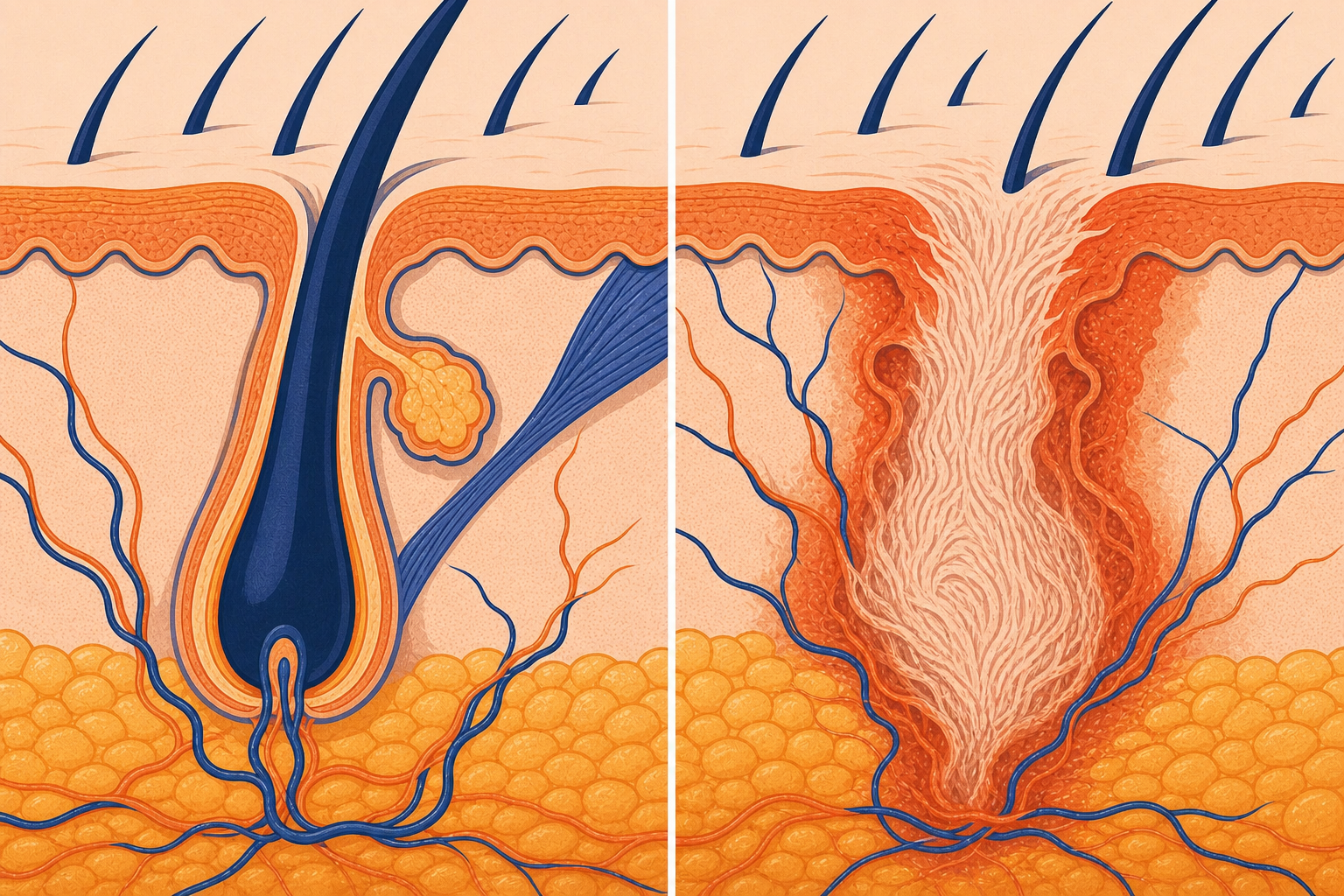
Scarring alopecia works differently. When folliculitis or lichen planopilaris goes untreated, inflammation reaches deep enough to replace the follicle with scar tissue. There is no bulb left to produce hair once that happens, and no treatment can rebuild a structure that no longer exists.
The practical takeaway is timing. Early on, scarring and non-scarring conditions can look almost identical: redness, itching, some flaking. The difference only becomes obvious once follicles are already gone. Persistent scalp symptoms are worth getting checked, and knowing how to find a legitimate hair loss clinic can help you take that step.
Warning Signs Your Scalp Hair Loss Needs Medical Attention
Certain signs point to something a shampoo change will not fix. If you notice any of these, it is worth getting a licensed healthcare provider to take a look.
- Crusty, weeping, or oozing patches on the scalp
- Bald spots that spread quickly over days or weeks
- Round or oval patches of hair loss with sharply defined edges
- Burning or pain alongside the itching, beyond mild discomfort
- Redness or swelling that keeps spreading
- Pus-filled bumps or sores that do not heal
- No regrowth after several months despite the itching improving
Sharp-edged patches paired with pain can point to alopecia areata or an infection instead of simple dandruff. Hair loss genetics and early intervention also play a role in how quickly conditions progress. A crusty patch that keeps weeping can signal folliculitis needing more than a topical treatment.
The timeline matters as much as the symptoms themselves. A scalp that stays itchy or inflamed for more than a few weeks, without any sign of settling down, has moved past the range where at-home care alone usually helps. It is also worth understanding the difference between treatment-related shedding and thinning if hair loss treatment has already begun. Waiting it out at that point risks the follicle damage described earlier. Getting checked earlier gives a licensed healthcare provider more options and a better chance of protecting the hair you still have.
Medical Treatment Options for Itchy Scalp Hair Loss
Treatment depends on which condition is driving the itch and shedding, which is why a licensed healthcare provider assessment matters before reaching for a prescription.
- Dandruff and seborrheic dermatitis: topical prescription treatments are a common first step when over-the-counter options have not controlled the flaking and inflammation.
- Scalp psoriasis: typically managed with topical prescription treatments to slow the accelerated skin cell turnover that creates thick, scaly plaques.
- Tinea capitis and other fungal infections: generally require oral prescription treatment, since topical products alone rarely reach the infection deep within the follicle.
- Lichen planopilaris and alopecia areata: a licensed healthcare provider may consider treatments that calm the immune response driving follicle damage.
The earlier these are treated, the better the outlook for preserving existing follicles. Persistent or spreading symptoms are worth having assessed promptly, since the window for protecting hair narrows once scarring begins.
At-Home Scalp Care Practices for Hair Loss
While medical treatment targets the underlying condition, a few daily habits can ease itching and reduce follicle stress in the meantime.
Choose a targeted shampoo. Look for a medicated option formulated for dandruff or seborrheic dermatitis. These shampoos help control the yeast and flaking that drive irritation, and using one regularly can calm itch without disrupting the rest of your routine.
Handle wet hair gently. Hair is weakest right after a shower. Pat it dry with a towel instead of rubbing, skip the tight top-knot right after washing, and use a wide-tooth comb instead of a brush on damp strands. These small changes cut down on the mechanical trauma that scratching already adds to a stressed scalp.
Support your scalp from the inside. A diet with enough protein, iron, and omega-3 fatty acids gives your body the building blocks it needs for healthy skin and hair. This will not resolve an inflammatory scalp condition on its own, but it removes one more variable working against you.
Massage regularly. A few minutes of scalp massage, using your fingertips and not your nails, can improve circulation to the area. Skip this if your scalp is actively irritated or broken, since added friction will make things worse.
Watch your product ingredients. Fragrances, sulfates, and certain dyes are common triggers for allergic contact dermatitis. If itching starts shortly after switching shampoos, conditioners, or styling products, that timing is worth mentioning to a licensed healthcare provider.
Getting a Hair Loss Assessment Through a Men's Online Health Clinic
Phoenix is a Canadian men's online health clinic that connects patients with licensed healthcare providers for hair loss assessment. The process starts with a short, confidential online health questionnaire, with no appointment, no waiting room, and no video call required. A licensed Canadian healthcare provider reviews the submission and, where clinically appropriate, recommends a treatment plan based on the patient's specific situation. For men dealing with both scalp symptoms and hair loss, the assessment can help determine whether an inflammatory condition is driving both problems at once, which changes the treatment approach. Prescriptions are processed through licensed Canadian pharmacy partners and shipped in plain, unbranded packaging, with ongoing support available through secure text-based messaging for follow-up questions or plan adjustments. No family doctor referral is needed to access the service.
FAQ
Can an itchy scalp and hair loss share the same root cause, or does one condition trigger the other?
Both symptoms typically trace back to the same underlying inflammation rather than one causing the other. Conditions like seborrheic dermatitis, scalp psoriasis, and folliculitis create an environment that triggers itching while also disrupting the hair follicle's growth cycle. Repeated scratching adds mechanical stress on top of that inflammation, but treating the source is what protects the follicles.
What's the difference between scarring hair loss from lichen planopilaris or folliculitis and non-scarring hair loss from dandruff or seborrheic dermatitis?
Non-scarring conditions like dandruff and seborrheic dermatitis leave the follicle structure intact, so hair can typically regrow once the underlying condition is treated. Scarring conditions like untreated folliculitis and lichen planopilaris replace follicles with scar tissue, making regrowth impossible. The two can look nearly identical early on, which is why getting assessed before permanent damage occurs matters.
How do I know when itchy scalp hair loss needs a licensed healthcare provider rather than a medicated shampoo?
A medicated shampoo formulated for dandruff or seborrheic dermatitis can ease mild itching and reduce day-to-day follicle stress. If you notice spreading bald patches, sharply defined edges around patches, burning or pain alongside the itch, weeping or crusted sores, or no improvement after a few weeks, those signs point to a condition a shampoo alone will not resolve.
Can men in Canada get assessed for itchy scalp hair loss through Phoenix without an in-person visit?
Yes. Phoenix connects Canadian men with licensed healthcare providers through a short, confidential online health questionnaire, with no appointment, waiting room, or video call required. A licensed Canadian healthcare provider reviews the submission and, where clinically appropriate, recommends a treatment plan, with prescriptions processed through licensed Canadian pharmacy partners and shipped in plain, unbranded packaging.
What scalp conditions cause both itching and hair loss at the same time?
Several distinct conditions produce both symptoms together, including dandruff, seborrheic dermatitis, scalp psoriasis, alopecia areata, folliculitis, tinea capitis, allergic contact dermatitis, and lichen planopilaris. Each works through a different mechanism, ranging from yeast overgrowth and immune responses to fungal infection and direct follicle inflammation. Identifying which condition is driving your symptoms changes the treatment approach, which is why a proper assessment matters.
Final Thoughts on Itchy Scalp Hair Loss Causes and Care
Most scalp conditions that cause itching and shedding are treatable, and your follicles are more forgiving earlier in the process. Small habits like choosing the right shampoo and handling wet hair gently can reduce day-to-day stress on your scalp while you sort out the bigger picture. If things are not settling down after a few weeks, that is a good time to get a proper look.
References
- "Itchy Scalp and Hair Loss." Emrahcinik.com. https://emrahcinik.com/itchy-scalp-hair-loss/
- Murphrey MB, Vaidya T, Zito PM. Anatomy, Hair. In: StatPearls [Internet]. Treasure Island (FL): StatPearls Publishing; 2023. https://www.ncbi.nlm.nih.gov/books/NBK513312/
- Vázquez-Herrera NE, Sharma D, Aleid NM, Tosti A. Scalp Itch: A Systematic Review. Skin Appendage Disord. 2018;4(3):187-199. PMC6120392. https://pmc.ncbi.nlm.nih.gov/articles/PMC6120392/
- "Itchy Scalp and Hair Loss." Healthline. https://www.healthline.com/health/itchy-scalp-hair-loss

Recommended Articles

Ozempic Online in Canada: What to Know in 2026
Order Ozempic online in Canada through a licensed healthcare provider. See pricing for brand and generic semaglutide, and how the assessment works.

What Makes GLP-1 Different for Men
GLP-1 treatment works differently in men. Key factors like muscle loss, side effects, and Canadian access options explained.

Online Weight Loss Programs in Canada: What to Know Before You Start
Considering an online weight loss program in Canada? Learn how medical weight management works, eligibility, costs, safety and what to look for.